<?xml version="1.0" encoding="UTF-8"?>
<!DOCTYPE html PUBLIC "-//W3C//DTD XHTML 1.1//EN" "http://www.w3.org/TR/xhtml11/DTD/xhtml11.dtd">
<html xmlns="http://www.w3.org/1999/xhtml" xml:lang="en">
<head>
<meta content="text/html; charset=UTF-8" http-equiv="content-type" />
<meta http-equiv="Content-Language" content="en" />
<meta name="generator" content="Pressbooks 5.18.2" />
<meta name="pb-authors" content="Kristin Conlin and Allison Jennings-Roche" />
<meta name="pb-editors" content="Harvey Sky and Nett Smith" />
<meta name="pb-translators" content="" />
<meta name="pb-reviewers" content="" />
<meta name="pb-illustrators" content="" />
<meta name="pb-contributors" content="" />
<meta name="pb-title" content="Strategic information literacy: Targeted knowledge with broad application" />
<meta name="pb-language" content="en" />
<meta name="pb-cover-image" content="https://ubalt.pressbooks.pub/app/uploads/sites/4/2021/01/StrategicIL_Cover-1-scaled.jpg" />
<meta name="pb-book-license" content="cc-by-nc" />
<meta name="pb-custom-copyright" content="This work is licensed under a Creative Commons Attribution-NonCommercial-ShareAlike 4.0 International License." />
<meta name="pb-is-based-on" content="https://kconlin.pressbooks.com" />
<meta name="pb-copyright-holder" content="Kristin Conlin" />
<meta name="pb-about-140" content="Critically evaluate and strategically interact with information we consume daily." />
<meta name="pb-primary-subject" content="GP" />
<meta name="pb-short-title" content="Strategic information literacy" />
<meta name="pb-copyright-year" content="2019" />
<meta name="pb-about-unlimited" content="A living book designed to be revised, Strategic Information Literacy will remain relevant to casual and critical information consumers and creators so long as it applies to how they interact with information. The authors invite revision and redistribution of the book’s content to meet the information literacy needs of its readers." />
<meta name="pb-audience" content="adult" />
<meta name="pb-additional-subjects" content="GPF, UNH, UB" />
<title>Strategic information literacy: Targeted knowledge with broad application</title>
</head>
<body lang='en' >
<div id="half-title-page"><h1 class="title">Strategic information literacy: Targeted knowledge with broad application</h1></div>
<div id="title-page"><h1 class="title">Strategic information literacy: Targeted knowledge with broad application</h1><h2 class="subtitle"></h2><h3 class="author">Kristin Conlin and Allison Jennings-Roche</h3><h3 class="author"></h3><h4 class="publisher"></h4><h5 class="publisher-city"></h5></div>
<div id="copyright-page"><div class="ugc">
<div class="license-attribution"><p><img src="https://ubalt.pressbooks.pub/app/themes/pressbooks-book/packages/buckram/assets/images/cc-by-nc.svg" alt="Icon for the Creative Commons Attribution-NonCommercial 4.0 International License" /></p><p>Strategic information literacy: Targeted knowledge with broad application by Kristin Conlin is licensed under a <a rel="license" href="https://creativecommons.org/licenses/by-nc/4.0/">Creative Commons Attribution-NonCommercial 4.0 International License</a>, except where otherwise noted.</p></div>
<p><a href="http://creativecommons.org/licenses/by-nc-sa/4.0/" rel="license"><img src="https://i.creativecommons.org/l/by-nc-sa/4.0/88x31.png" alt="Creative Commons License" /></a><br />This work is licensed under a <a href="http://creativecommons.org/licenses/by-nc-sa/4.0/" rel="license">Creative Commons Attribution-NonCommercial-ShareAlike 4.0 International License</a>.</p></div></div>
<div id="toc"><h1>Contents</h1><ul><li class="front-matter introduction"><a href="#front-matter-introduction"><span class="toc-chapter-title">Introduction</span> <span class="chapter-author">Kristin Conlin</span></a></li><li class="part"><a href="#part-main-body">Thinking: How do we know what we know?</a></li><li class="chapter standard"><a href="#chapter-analyticalthinking"><span class="toc-chapter-title">Analytical Thinking</span> <span class="chapter-author">Open Stax and Kristin Conlin</span></a></li><li class="chapter standard"><a href="#chapter-criticalthinking"><span class="toc-chapter-title">Critical Thinking</span> <span class="chapter-author">Open Stax and Kristin Conlin</span></a></li><li class="chapter standard"><a href="#chapter-problem-solving"><span class="toc-chapter-title">Problem Solving</span> <span class="chapter-author">Open Stax and Kristin Conlin</span></a></li><li class="chapter standard"><a href="#chapter-metacognition"><span class="toc-chapter-title">Metacognition</span> <span class="chapter-author">Open Stax and Kristin Conlin</span></a></li><li class="chapter standard"><a href="#chapter-what-makes-a-trustworthy-news-source"><span class="toc-chapter-title">What Makes a Trustworthy News Source?</span> <span class="chapter-author">Mike Caulfield and Kristin Conlin</span></a></li><li class="part"><a href="#part-literacies">Finding: Information, media, and social literacies</a></li><li class="chapter standard"><a href="#chapter-foundations-and-value-judgements"><span class="toc-chapter-title">Foundations and Value Judgements</span> <span class="chapter-author">Kristin Conlin</span></a></li><li class="chapter standard"><a href="#chapter-avoiding-confirmation-bias-in-searches"><span class="toc-chapter-title">Confirmation Bias</span> <span class="chapter-author">Mike Caulfield and Kristin Conlin</span></a></li><li class="chapter standard"><a href="#chapter-building-a-habit-by-checking-your-emotions"><span class="toc-chapter-title">Building a Fact-Checking Habit by Checking Your Emotions</span> <span class="chapter-author">Mike Caulfield</span></a></li><li class="chapter standard"><a href="#chapter-four-strategies"><span class="toc-chapter-title">Four Moves</span> <span class="chapter-author">Mike Caulfield and Kristin Conlin</span></a></li><li class="chapter standard"><a href="#chapter-what-reading-laterally-means"><span class="toc-chapter-title">What “Reading Laterally” Means</span> <span class="chapter-author">Mike Caulfield and Kristin Conlin</span></a></li><li class="chapter standard"><a href="#chapter-go-upstream-to-find-the-source"><span class="toc-chapter-title">Go Upstream to Find the Source</span> <span class="chapter-author">Mike Caulfield</span></a></li><li class="chapter standard"><a href="#chapter-how-to-think-about-research"><span class="toc-chapter-title">Research as discovery and fact checking</span> <span class="chapter-author">Mike Caulfield and Kristin Conlin</span></a></li><li class="chapter standard"><a href="#chapter-how-to-use-previous-work"><span class="toc-chapter-title">How to Use Previous Work</span> <span class="chapter-author">Mike Caulfield</span></a></li><li class="chapter standard"><a href="#chapter-understanding-astroturf"><span class="toc-chapter-title">Understanding Astroturf</span> <span class="chapter-author">Mike Caulfield</span></a></li><li class="chapter standard"><a href="#chapter-verifying-twitter-identity"><span class="toc-chapter-title">Verifying Twitter Identity</span> <span class="chapter-author">Mike Caulfield</span></a></li><li class="chapter standard"><a href="#chapter-promoted-tweets"><span class="toc-chapter-title">Promoted Tweets</span> <span class="chapter-author">Mike Caulfield</span></a></li><li class="chapter standard"><a href="#chapter-using-google-books-to-track-down-quotes"><span class="toc-chapter-title">Using Google Books to Track Down Quotes</span> <span class="chapter-author">Mike Caulfield</span></a></li><li class="chapter standard"><a href="#chapter-treat-google-cards-with-suspicion"><span class="toc-chapter-title">Treating Google’s “Snippets” with Suspicion</span> <span class="chapter-author">Mike Caulfield</span></a></li><li class="chapter standard"><a href="#chapter-finding-out-when-a-page-was-published"><span class="toc-chapter-title">Finding Out When a Page Was Published Using Google</span> <span class="chapter-author">Mike Caulfield</span></a></li><li class="part"><a href="#part-sharing-and-building-an-argument">Sharing and Building an Argument</a></li><li class="chapter standard"><a href="#chapter-data-literacy-and-visualization"><span class="toc-chapter-title">Data Literacy and Visualization</span></a></li><li class="chapter standard"><a href="#chapter-rhetorical-analysis-informal-fallacies"><span class="toc-chapter-title">Rhetorical Analysis &#038; Informal Fallacies</span></a></li><li class="part"><a href="#part-protecting-and-sharing-your-argument-and-yourself">Protecting and Sharing Your Argument (and Yourself)</a></li><li class="chapter standard"><a href="#chapter-irl"><span class="toc-chapter-title">IRL: In Real Life</span> <span class="chapter-author">Kristin Conlin</span></a></li><li class="chapter standard"><a href="#chapter-fact-checking-sites"><span class="toc-chapter-title">Fact-checking Sites</span> <span class="chapter-author">Mike Caulfield</span></a></li><li class="chapter standard"><a href="#chapter-smart-fast-and-protected"><span class="toc-chapter-title">Smart, fast, and protected</span> <span class="chapter-author">Kristin Conlin</span></a></li><li class="part display-none"><a href="#part-go-upstream">Go Upstream</a></li></ul></div>
<div class="front-matter introduction" id="front-matter-introduction" title="Introduction"><div class="front-matter-title-wrap"><h3 class="front-matter-number">1</h3><h1 class="front-matter-title"><span class="display-none">Introduction</span></h1></div><div class="ugc front-matter-ugc"><h2 class="chapter-author">Kristin Conlin</h2><p>As riveting a title as, &#8220;Strategic Information Literacy&#8221; may appear, we aren&#8217;t trying to fool anyone.  This text is designed to inform and build skills.  Skills that relate to how we interact with the information we consume passively and actively.  That&#8217;s not to say you won&#8217;t be impressed, intrigued, and horrified with what these pages contain.</p> <p>&nbsp;</p> <p>So, read on.</p> </div></div>
<div class="part " id="part-main-body"><div class="part-title-wrap"><h3 class="part-number">I</h3><h1 class="part-title">Thinking: How do we know what we know?</h1></div><p>Thinking is one of those hard-to-pinpoint aspects of life we typically don’t analyze much—like breathing or walking or sleeping. We constantly think, and becoming more attuned to how we think and what we do when we encounter new ideas is an excellent habit to pursue.</p> <div class="textbox shaded"><strong>If you’re going to do anything as much as you think, you might just as well learn about it and hone that skill.</strong></div> <p>You may have read quotes or inspirational slogans that claim <em data-effect="italics">you are what you think.</em> What does that mean? Can you <em data-effect="italics">think</em> yourself into a good mood? Can you <em data-effect="italics">think</em> you have a million dollars in your pocket? Does that mean you are the next music sensation if you often sing at parties? Not necessarily, but consider Jose, for instance. He isn’t a rock and roll star, but Jose spends a lot of his leisure time thinking about music, analyzing performances, memorizing his favorite musicians’ characteristics, buying fan clothing, and even designing a creative means to explain his excitement for music to his friends through a homemade video. Jose certainly could allow his fascination to seep into other aspects of his life. Do you have a hobby or interest you spend a lot of time thinking about?</p> <p>Many people go to great lengths to attend a concert by a favorite music star. They think creatively about how to save enough money for tickets; they think analytically about scheduling their other obligations to have time off work to attend or how to make up work in their college classes. This much planning involves a great deal of thinking, and not all about music. In the example about Jose, thinking directs the actions of the person doing the thinking. So, in fact, what we think <em data-effect="italics">does</em> influence who we are and how we act. We have many resources available to be more effective thinkers, and learning about these resources gives us options.</p> <div class="Attribution__Content-sc-11isnv6-3 bUUJqd"><p>&nbsp;</p> <p>Want to cite, share, or modify this book? This book is Creative Commons Attribution License 4.0 and you must attribute OpenStax.</p> <p><strong>Attribution information</strong></p> <ul><li>If you are redistributing all or part of this book in a print format, then you must include on every physical page the following attribution:<br /> <blockquote><p>Access for free at https://openstax.org/books/college-success/pages/1-introduction</p></blockquote> </li> <li>If you are redistributing all or part of this book in a digital format, then you must include on every digital page view the following attribution:<br /> <blockquote><p>Access for free at <a href="https://openstax.org/books/college-success/pages/1-introduction" data-url="https://openstax.org/books/college-success/pages/1-introduction">https://openstax.org/books/college-success/pages/1-introduction</a></p></blockquote> </li> </ul> <p><strong>Citation information</strong></p> <ul><li>Use the information below to generate a citation. We recommend using a citation tool such as <a href="https://www.lib.ncsu.edu/citationbuilder/#/default/default" target="_blank" rel="noopener noreferrer" data-url="https://www.lib.ncsu.edu/citationbuilder/#/default/default">this one</a>. <ul><li>Authors: Amy Baldwin</li> <li>Publisher/website: OpenStax</li> <li>Book title: College Success</li> <li>Publication date: Mar 27, 2020</li> <li>Location: Houston, Texas</li> <li>Book URL: <a href="https://openstax.org/books/college-success/pages/1-introduction" data-url="https://openstax.org/books/college-success/pages/1-introduction">https://openstax.org/books/college-success/pages/1-introduction</a></li> <li>Section URL: <a href="https://openstax.org/books/college-success/pages/7-1-what-thinking-means" data-url="https://openstax.org/books/college-success/pages/7-1-what-thinking-means">https://openstax.org/books/college-success/pages/7-1-what-thinking-means</a></li> </ul> </li> </ul> <p>© Mar 26, 2020 OpenStax. Textbook content produced by OpenStax is licensed under a Creative Commons Attribution License 4.0 license. <strong>The OpenStax name, OpenStax logo, OpenStax book covers, OpenStax CNX name, and OpenStax CNX logo are not subject to the Creative Commons license and may not be reproduced without the prior and express written consent of Rice University.</strong></p> </div><div class="ugc part-ugc"></div></div>
<div class="chapter standard" id="chapter-analyticalthinking" title="Analytical Thinking"><div class="chapter-title-wrap"><h3 class="chapter-number">1</h3><h2 class="chapter-title">Analytical Thinking</h2></div><div class="ugc chapter-ugc"><h2 class="chapter-author">Open Stax and Kristin Conlin</h2> <div class="textbox textbox--key-takeaways"><div class="textbox__header"><p class="textbox__title">Questions to consider as you read this chapter</p> </div> <div class="textbox__content"><ul id="fs-idm219105840"><li>How can you best establish component parts in thinking?</li> <li>How can you use analysis to improve efficiency?</li> </ul> </div> </div> <p id="fs-idm219127856">Thinking helps in many situations, as we’ve discussed throughout this chapter. When we work out a problem or situation systematically, breaking the whole into its component parts for separate analysis, to come to a solution or a variety of possible solutions, we call that <em data-effect="italics"><span class="glossary-term"><strong>analytical thinking</strong></span>.</em> Characteristics of analytical thinking include:</p> <ol><li>setting up the parts of problem or situation</li> <li>using information literacy skills to engage in inquiry about the parts</li> <li>verifying the validity of any sources you reference to come to a conclusion</li> </ol> <div class="textbox"><p>While the phrase <span class="glossary-term"><em data-effect="italics">analytical thinking</em></span> may sound daunting, we actually do this sort of thinking in our everyday lives when we brainstorm, budget, detect patterns, plan, compare, work puzzles, and make decisions based on multiple sources of information.</p> <p>Think of all the thinking that goes into the logistics of a dinner-and-a-movie date—where to eat, what to watch, who to invite, what to wear, popcorn or candy—when choices and decisions are rapid-fire, but we do it relatively successfully all the time.</p> </div> <p id="fs-idm228441872">Employers specifically look for candidates with analytical skills because they need to know employees can use clear and logical thinking to resolve conflicts that cause work to slow down or may even put the company in jeopardy of not complying with state or national requirements. If everything always went smoothly on the shop floor or in the office, we wouldn’t need front-line managers, but everything doesn’t always go according to plan or company policy.</p> <p>Your ability to think analytically could be the difference between getting a good job and being passed over by others who prove they are stronger thinkers. A mechanic who takes each car apart piece by piece to see what might be wrong instead of investigating the entire car, gathering customer information, assessing the symptoms, and focusing on a narrow set of possible problems is not an effective member of the team. Some career fields even have set, formulaic analyses that professionals in those fields need to know how to conduct and understand, such as a cost analysis, a statistical analysis, or a return on investment (ROI) analysis.</p> <div id="fs-idm487414528" class="activity ui-has-child-title" data-type="note" data-has-label="true" data-label=""><div class="bc-section section"><div class="os-note-body"><div class="textbox"><div class="bc-section section"><div class="os-note-body"><p id="fs-idm186109360"><strong>Check your experience:</strong> Create a list of at least two courses you are taking now that you think would routinely practice analytical thinking. Now, think of the profession you are interested in joining:</p> <ul><li>How could the deliberate use of analytical thinking processes be beneficial for that career field?</li> <li>What are you currently learning about in your courses that apply directly to your chosen career path?</li> <li>Think of at least two ways analytical thinking would be used in the career field you are pursuing.</li> </ul> </div> </div> </div> <p>&nbsp;</p> </div> </div> </div> <div class="bc-section section" id="fs-idm212953392" data-depth="1"><h3 data-type="title">Establishing Component Parts</h3> <p id="fs-idm225920592"><span class="glossary-term">Component parts</span> refer to the separate elements of a situation or problem. It might include the people involved, the locations of the people, the weather, market fluctuations, or any number of other characteristics of the situation you’re examining. If you don’t identify all parts of a problem, you run the risk of ignoring a critical element when you offer the solution.&nbsp; This may not ultimately be the solution, but after establishing the component parts and thinking analytically, you have provided at least one viable solution.</p> <div class="textbox"><strong>Situation: </strong>There is a scheduling problem at home and you seem to never see your loved ones. The first step in thinking through this problem analytically would be to decide what is contributing to this unfavorable result:<br /> <strong>Assess the contributing factors:</strong> Examine the family members’ individual work, school, and personal schedules, and then create a group calendar to determine if pockets of time exist that are not taken by outside commitments.<br /> <strong>Potential solutions: </strong>Perhaps rather than reading your homework assignments at the college library, you could plan to one day a week read with other members of your family who are doing quiet work. You may also need to determine how time is spent to better understand the family’s use of time, perhaps using categories such as work/school, recreation, exercise, sleep, and meals.&nbsp; Once you sort the categories for all the family members, you may see blocks of time spent that would lend themselves to combining with other categories—if you and your significant other both exercise three times a week for an hour each time but at separate locations, one possible solution may be to work out together. You could alternate locations if both people have favorite places to run, or you could compromise and decide on one location for both of you—one week at the park, one week at the campus rec center.</div> <p>What if you encounter setbacks in any steps of your problem solving? Is there a contingency plan? In the construction industry, engineers called this <em data-effect="italics">float,</em> and they deliberately build in extra time and money in case problems arise on the project. This allows them to avoid getting off schedule, for instance if a severe storm makes access to the worksite impossible.</p> </div> <div class="bc-section section" id="fs-idm237196096" data-depth="1"><h3 data-type="title">Forging a Revolution</h3> <p id="fs-idm200799616">While most problems require a variety of thinking types, <span class="glossary-term">analytical thinking</span> is arguably required in solving all.</p> <p id="fs-idm202110432">In the 1960s, companies did not have a fast, reliable, and cost-effective way to deliver urgent documents or packages to each other. The standard mail system was slow but inexpensive, and the only alternative was a private courier, which, while faster, was prohibitively expensive. That’s when Frederick W. Smith came up with the idea of a national, overnight delivery service as a part of an assignment in his undergraduate economics class at Yale University.</p> <p>As the story goes, Smith received only an average grade because evidently his professor wasn’t all that impressed with the concept, but after analyzing the problems with the current system, thinking through his original ideas more fully, and refining his business plan, Smith launched FedEx, the largest, now global, overnight delivery service in the world.<sup id="footnote-ref1" data-type="footnote-number"><a href="#footnote1" data-type="footnote-link" data-url="https://ubalt.pressbooks.pub/strategicil/chapter/analyticalthinking/#footnote1">1</a></sup></p> <p>This isn’t a parable about ignoring your professors, but a testimony to thinking through ideas others may not initially support or even understand; thinking can create change and always has. As with Smith’s overnight delivery service, any service we now use and any problem we may still face provides thinkers with opportunities to generate solutions and viable options for improvement. Your thinking may result in a new personal service, a cure for cancer, or a revolutionary way to deliver water to developing countries.</p> </div> <div id="83776" data-type="footnote-refs"><h3 data-type="footnote-refs-title">Footnotes</h3> <ul data-list-type="bulleted" data-bullet-style="none"><li id="footnote1" data-type="footnote-ref"><a href="#footnote-ref1" data-type="footnote-ref-link" data-url="https://ubalt.pressbooks.pub/strategicil/chapter/analyticalthinking/#footnote-ref1">1</a> <span data-type="footnote-ref-content">Bloomberg Business Week (2004</span>). <span data-type="footnote-ref-content">Online extra: Fred Smith on the birth of FedEx. Retrieved 1/28/20. <a href="https://www.bloomberg.com/news/articles/2004-09-19/online-extra-fred-smith-on-the-birth-of-fedex" data-url="https://www.bloomberg.com/news/articles/2004-09-19/online-extra-fred-smith-on-the-birth-of-fedex">https://www.bloomberg.com/news/articles/2004-09-19/online-extra-fred-smith-on-the-birth-of-fedex</a></span></li> </ul> </div> <div class="Details-xi326o-3 Attribution__AttributionDetails-sc-11isnv6-4 ecFdAU" data-testid="attribution-details" data-analytics-region="attribution"><div class="Attribution__Content-sc-11isnv6-3 bUUJqd"><p><strong>Citation information from original OpenStax publication (content modified within CC license guidelines) </strong></p> <ul><li style="list-style-type: none;"><ul><li>Authors: Amy Baldwin</li> <li>Publisher/website: OpenStax</li> <li>Book title: College Success</li> <li>Publication date: Mar 27, 2020</li> <li>Location: Houston, Texas</li> <li>Book URL: <a href="https://openstax.org/books/college-success/pages/1-introduction" data-url="https://openstax.org/books/college-success/pages/1-introduction">https://openstax.org/books/college-success/pages/1-introduction</a></li> <li>Section URL: <a href="https://openstax.org/books/college-success/pages/7-3-analytical-thinking" data-url="https://openstax.org/books/college-success/pages/7-3-analytical-thinking">https://openstax.org/books/college-success/pages/7-3-analytical-thinking</a></li> </ul> </li> </ul> </div> </div> </div></div>
<div class="chapter standard" id="chapter-criticalthinking" title="Critical thinking"><div class="chapter-title-wrap"><h3 class="chapter-number">2</h3><h2 class="chapter-title">Critical Thinking</h2></div><div class="ugc chapter-ugc"><h6 class="short-title">Critical thinking</h6><h2 class="chapter-author">Open Stax and Kristin Conlin</h2> <div class="textbox textbox--key-takeaways"><div class="textbox__header"><p class="textbox__title">Questions to consider while you read</p> </div> <div class="textbox__content"><ul><li>How can determining the situation help you think critically?</li> <li>How do you present informed, unbiased (or less biased) thinking?</li> <li>What is the difference between factual arguments and opinions?</li> </ul> </div> </div> <p id="fs-idm336298752"><span id="term40" class="no-emphasis" data-type="term"><span class="glossary-term">Critical thinking</span></span> has become a buzz phrase in education and corporate environments in recent years. The definitions vary slightly, but most agree that thinking critically includes some form of judgement that thinkers generate after careful analysis of the perspectives, opinions, or experimental results present for a particular problem or situation. Before you wonder if you’re even capable of critical thinking, consider that you think critically every day.</p> <p id="fs-idm653207712">When you decide to make your lunch rather than just grabbing a bag of chips, you’re thinking critically. You have to plan ahead, buy the food, possibly prepare it, arrange to and carry the lunch with you, and you may have various reasons for doing that—making healthier eating choices, saving money for an upcoming trip, or wanting more quiet time to unwind instead of waiting in a crowded lunch line. You are constantly weighing options, consulting data, gathering opinions, making choices, and then evaluating those decisions, which is a general definition of critical thinking.</p> <p id="fs-idm324558352">Consider the following situations and how each one demands your thinking attention. Which do you find most demanding of critical thinking? Why?</p> <ol id="fs-idm367513280"><li>Participating in competitive athletic events</li> <li>Watching competitive athletic events</li> <li>Reading a novel for pleasure</li> <li>Reading a textbook passage in science</li> </ol> <p id="fs-idm327913104">Critical thinking forces you to determine the actual situation under question and to determine your thoughts and actions around that situation.</p> <div class="bc-section section" id="fs-idm339047360" data-depth="1"><h3 data-type="title">Determining the Problem</h3> <p id="fs-idm328528832">One component to keep in mind to guide your <span class="glossary-term">critical thinking</span> is to determine the situation.</p> <ul><li>What problem are you solving?</li> <li>When problems become complex and multifaceted, it is easy to be distracted by the simple parts that may not need as much thinking to resolve but also may not contribute as much to the ultimate problem resolution.</li> <li>What aspect of the situation truly needs your attention and your critical thinking?</li> </ul> <p id="fs-idm336045920">Critical thinking differs according to the subject you’re thinking about, and as such it can be difficult to pin down any sort of formula to make sure you are doing a good job of thinking critically in all situations. While you may need to adapt this list of critical thinking components, you can get started if you do the following:</p> <ul id="fs-idm331284000"><li>Question everything</li> <li>Conduct legitimate research</li> <li>Limit your assumptions</li> <li>Recognize your own biases</li> <li>Gather and weigh all options</li> </ul> <p id="fs-idm335860416">Additionally, you must recognize that changes will occur and may alter your conclusions now and in the future. You may eventually have to revisit an issue you effectively resolved previously and adapt to changing conditions. Knowing when to do that is another example of critical thinking. Informed flexibility, or knowing that parts of the plan may need to change and how those changes can work into the overall goal, is also a recognized element of thinking critically.</p> </div> <div class="bc-section section" id="fs-idm325666832" data-depth="1"><h3 data-type="title">Defending against Bias</h3> <p id="fs-idm654128160">Once you have all your information gathered and you have checked your sources for currency and validity, you need to direct your attention to how you’re going to present your now well-informed analysis. Be careful on this step to recognize your own possible biases.</p> <p><strong>Facts are verifiable;</strong> <strong>opinions are beliefs without supporting evidence</strong>. Stating an opinion is just that. You could say “Blue is the best color,” and that’s your opinion. If you were to conduct research and find evidence to support this claim, you could say, “Researchers at Oxford University recognize that the use of blue paint in mental hospitals reduces heart rates by 25% and contributes to fewer angry outbursts from patients.” This would be an informed analysis with credible evidence to support the claim.</p> <p id="fs-idm351143856">Not everyone will accept your analysis, which can be frustrating. Most people resist change and have firm beliefs on both important issues and less significant preferences. With all the competing information surfacing online, on the news, and in general conversation, you can understand how confusing it can be to make any decisions. Look at all the reliable, valid sources that claim different approaches to be the <em data-effect="italics">best</em> diet for healthy living: ketogenic, low-carb, vegan, vegetarian, high fat, raw foods, paleo, Mediterranean, etc. All you can do in this sort of situation is conduct your own serious research, check your sources, and write clearly and concisely to provide your analysis of the information for consideration. You cannot force others to accept your stance, but you can show your evidence in support of your thinking, being as persuasive as possible without lapsing into your own personal biases. Then the rest is up to the person reading or viewing your analysis.</p> </div> <div class="bc-section section" id="fs-idm334408064" data-depth="1"><h3 data-type="title">Factual Arguments vs. Opinions</h3> <p id="fs-idm363086592">Thinking and constructing analyses based on your thinking will bring you in contact with a great deal of information. Some of that information will be factual, and some will not be. You need to be able to distinguish between facts and opinions so you know how to support your arguments. Begin with basic definitions:</p> <ul id="fs-idm326348688"><li><strong data-effect="bold">Fact: </strong>a statement that is true and backed up with evidence; facts can be verified through observation or research</li> <li><strong data-effect="bold">Opinion: </strong>a statement someone holds to be true without supporting evidence; opinions express beliefs, assumptions, perceptions, or judgements</li> </ul> <p id="fs-idm324340480">Of course, the tricky part is that most people do not label statements as fact and opinion, so you need to be aware and recognize the difference as you go about honing your critical thinking skills.</p> <p id="fs-idm333400576">You probably have heard the old saying “Everyone is entitled to their own opinions,” which may be true, but conversely, not everyone is entitled to their own facts. Facts are true for everyone, not just those who want to believe in them. For example, <em data-effect="italics">mice are animals</em> is a fact; <em data-effect="italics">mice make the best pets</em> is an opinion.</p> <div id="fs-idm339033296" class="activity ui-has-child-title" data-type="note" data-has-label="true" data-label=""><div class="bc-header header"><h3 class="os-title" data-type="title"><span class="os-title-label">Activity</span></h3> </div> <div class="bc-section section"><div class="os-note-body"><p id="fs-idm324095520">Determine if the following statements are facts or opinions based on just the information provided here, referring to the basic definitions of the terms <strong>fact</strong> of <strong>opinion</strong> above. Some people consider scientific findings to be opinions even when they are convincingly backed by reputable evidence and experimentation. However, remember the definition of <em data-effect="italics">fact</em>—verifiable by research or observation. Think about what other research you may have to conduct to make an informed decision.</p> <ul id="fs-idm329128976"><li>Oregon is a state in the United States. (How would this be proven?)</li> <li>Increased street lighting decreases criminal behavior. (What information would you need to validate this claim?)</li> <li>In 1952, Elizabeth became Queen of England. (What documents could validate this?)</li> <li>Acne is an embarrassing skin condition. (Who might verify this claim?)</li> <li>Kindergarten decreases student dropout rates. (Think of different interest groups that may take sides on this issue.)</li> <li>Carbohydrates promote weight gain. (Can you determine if this is a valid statement?)</li> <li>Immigration is good for the US economy. (What research would help you make an informed decision on this topic?)</li> </ul> </div> </div> </div> <p id="fs-idm371165712">Many people become very attached to their opinions, even stating them as facts despite the lack of verifiable evidence. Think about political campaigns, sporting rivalries, musical preferences, and religious or philosophical beliefs. When you are reading, writing, and thinking critically, you must be on the lookout for sophisticated opinions others may present as factual information. While it’s possible to be polite when questioning another person’s opinions when engaging in intellectual debate, thinking critically requires that you do conduct this questioning.</p> <p id="fs-idm376368432">For instance, someone may say or write that a particular political party should move its offices to different cities every year—that’s an opinion regardless of whether you side with one party or the other. If, on the other hand, the same person said that one political party is headquartered in a specific city, that is a fact you can verify. You could find sources that can validate or discredit the statement. Even if the city the person lists as the party headquarters is incorrect, the statement itself is still a fact—just an erroneous one.</p> <p>If you use biased and opinionated information or even incorrect facts as your evidence to support your factual arguments, then you have not validated your sources or checked your facts well enough. At this point, you would need to keep researching.</p> </div> <div class="Details-xi326o-3 Attribution__AttributionDetails-sc-11isnv6-4 ecFdAU" data-testid="attribution-details" data-analytics-region="attribution"><div class="Attribution__AttributionSummary-sc-11isnv6-2 gobEtQ Details__Summary-xi326o-2 goqLfs" aria-label="Citation/Attribution"></div> <div class="Attribution__Content-sc-11isnv6-3 bUUJqd"><p>Want to cite, share, or modify this book? This book is Creative Commons Attribution License<br /> 4.0 and you must attribute OpenStax.</p> <p><strong>Attribution information</strong></p> <ul><li>If you are redistributing all or part of this book in a print format,<br /> then you must include on every physical page the following attribution: <blockquote><p>Access for free at https://openstax.org/books/college-success/pages/1-introduction</p></blockquote> </li> <li>If you are redistributing all or part of this book in a digital format,<br /> then you must include on every digital page view the following attribution: <blockquote><p>Access for free at <a href="https://openstax.org/books/college-success/pages/1-introduction" data-url="https://openstax.org/books/college-success/pages/1-introduction">https://openstax.org/books/college-success/pages/1-introduction</a></p></blockquote> </li> </ul> <p><strong>Citation information</strong></p> <ul><li>Use the information below to generate a citation. We recommend using a<br /> citation tool such as<br /> <a href="https://www.lib.ncsu.edu/citationbuilder/#/default/default" target="_blank" rel="noopener noreferrer" data-url="https://www.lib.ncsu.edu/citationbuilder/#/default/default">this one</a>. <ul><li>Authors: Amy Baldwin</li> <li>Publisher/website: OpenStax</li> <li>Book title: College Success</li> <li>Publication date: Mar 27, 2020</li> <li>Location: Houston, Texas</li> <li>Book URL: <a href="https://openstax.org/books/college-success/pages/1-introduction" data-url="https://openstax.org/books/college-success/pages/1-introduction">https://openstax.org/books/college-success/pages/1-introduction</a></li> <li>Section URL: <a href="https://openstax.org/books/college-success/pages/7-4-critical-thinking" data-url="https://openstax.org/books/college-success/pages/7-4-critical-thinking">https://openstax.org/books/college-success/pages/7-4-critical-thinking</a></li> </ul> </li> </ul> <p>© Mar 26, 2020 OpenStax. Textbook content produced by OpenStax is licensed under a<br /> Creative Commons Attribution License 4.0 license. <strong>The OpenStax name, OpenStax logo, OpenStax book<br /> covers, OpenStax CNX name, and OpenStax CNX logo are not subject to the Creative Commons license and may<br /> not be reproduced without the prior and express written consent of Rice University.</strong></p> </div> </div> </div></div>
<div class="chapter standard" id="chapter-problem-solving" title="Problem Solving"><div class="chapter-title-wrap"><h3 class="chapter-number">3</h3><h2 class="chapter-title">Problem Solving</h2></div><div class="ugc chapter-ugc"><h2 class="chapter-author">Open Stax and Kristin Conlin</h2> <div class="textbox"><p id="fs-idm385586416"><strong data-effect="bold">Questions to consider:</strong></p> <ul id="fs-idm358782144"><li>How can determining the best approach to solve a problem help you generate solutions?</li> <li>Why do thinkers create multiple solutions to problems?</li> </ul> </div> <p id="fs-idm327057744">When we’re solving a problem, whether at work, school, or home, we are being asked to perform multiple, often complex, tasks. The most effective problem-solving approach includes some variation of the following steps:</p> <ul id="fs-idm335235296"><li>Determine the issue(s)</li> <li>Recognize other perspectives</li> <li>Think of multiple possible results</li> <li>Research and evaluate the possibilities</li> <li>Select the best result(s)</li> <li>Communicate your findings</li> <li>Establish logical action items based on your analysis</li> </ul> <p id="fs-idm322218464">Determining the best approach to any given problem and generating more than one possible solution to the problem constitutes the complicated process of problem-solving. People who are good at these skills are highly marketable because many jobs consist of a series of problems that need to be solved for production, services, goods, and sales to continue smoothly.</p> <div class="textbox"><p>Think about what happens when a worker at your favorite coffee shop slips on a wet spot behind the counter, dropping several drinks she just prepared. One problem is the employee may be hurt, in need of attention, and probably embarrassed; another problem is that several customers do not have the drinks they were waiting for; and another problem is that stopping production of drinks (to care for the hurt worker, to clean up her spilled drinks, to make new drinks) causes the line at the cash register to back up.<br /> A good manager has to juggle all of these elements to resolve the situation as quickly and efficiently as possible. That resolution and return to standard operations doesn’t happen without a great deal of thinking: prioritizing needs, shifting other workers off one station onto another temporarily, and dealing with all the people involved, from the injured worker to the impatient patrons.</p> </div> <p>&nbsp;</p> <div class="bc-section section" id="fs-idm325569488" data-depth="1"><h3 data-type="title">Determining the Best Approach</h3> <p id="fs-idm327923264">Faced with a problem-solving opportunity, you must assess the skills you will need to create solutions. Problem-solving can involve many different types of thinking.</p> <ul><li>You may have to call on your creative, analytical, or critical thinking skills—or more frequently, a combination of several different types of thinking—to solve a problem satisfactorily.</li> <li>When you approach a situation, how can you decide what is the best type of thinking to employ? Sometimes the answer is obvious; if you are working a scientific challenge, you likely will use analytical thinking; if you are a design student considering the atmosphere of a home, you may need to tap into creative thinking skills; and if you are an early childhood education major outlining the logistics involved in establishing a summer day camp for children, you may need a combination of critical, analytical, and creative thinking to solve this challenge.</li> </ul> <div id="fs-idm653179472" class="activity ui-has-child-title" data-type="note" data-has-label="true" data-label=""><div class="bc-header header"><h3 class="os-title" data-type="title"><span class="os-title-label">Activity</span></h3> </div> <div class="bc-section section"><div class="os-note-body"><p id="fs-idm327529264">What sort of thinking do you imagine initially helped in the following scenarios? How would the other types of thinking come into resolving these problems? Write a one- to two-sentence rationale on scrap paper or notepad that explains why you chose the answers to the questions below.</p> <ol id="fs-idm319348832"><li>Mission Control reacting to the Apollo 13 emergency <ol id="fs-idm364336000" type="a"><li>Analytical thinking</li> <li>Creative thinking</li> <li>Critical thinking</li> </ol> </li> <li>Automakers coordinating the switch from fuel-based to electric cars <ol id="fs-idm338920768" type="a"><li>Analytical thinking</li> <li>Creative thinking</li> <li>Critical thinking</li> </ol> </li> <li>The construction of the New York subway system <ol id="fs-idm330338928" type="a"><li>Analytical thinking</li> <li>Creative thinking</li> <li>Critical thinking</li> </ol> </li> </ol> <p id="fs-idm333324352"></p></div> </div> </div> </div> <div class="bc-section section" id="fs-idm327667472" data-depth="1"><h3 data-type="title">Generating Multiple Solutions</h3> <p id="fs-idm371728624">Why do you think it is important to provide multiple solutions when you’re going through the steps to solve problems? Typically, you’ll end up only using one solution at a time, so why expend the extra energy to create alternatives?</p> <p>If you planned a wonderful trip to Europe and had all the sites you want to see planned out and reservations made, you would think that your problem-solving and organizational skills had quite a workout. But what if when you arrived, the country you’re visiting is enmeshed in a public transportation strike experts predict will last several weeks if not longer? A back-up plan would have helped you contemplate alternatives you could substitute for the original plans. You certainly cannot predict every possible contingency—sick children, weather delays, economic downfalls—but you can be prepared for unexpected issues to come up and adapt more easily if you plan for multiple solutions.</p> <p id="fs-idm328376608">Write out at least two possible solutions to these dilemmas:</p> <ul id="fs-idm331557008"><li>Your significant other wants a birthday present—you have no cash.</li> <li>You have three exams scheduled on a day when you also need to work.</li> <li>Your car breaks down and requires an expensive repair and you need bus fare home—your cell phone is dead and you only have an ATM card with a max withdrawal limit of $200.</li> <li>You have to pass a running test for your physical education class, but you’re out of shape.</li> </ul> <p id="fs-idm343320560">Providing more than one solution to a problem gives people options. You may not need several options, but having more than one solution will allow you to feel more in control and part of the problem-solving process.</p> </div> <div class="Details-xi326o-3 Attribution__AttributionDetails-sc-11isnv6-4 ecFdAU" data-testid="attribution-details" data-analytics-region="attribution"><div class="Attribution__AttributionSummary-sc-11isnv6-2 gobEtQ Details__Summary-xi326o-2 goqLfs" aria-label="Citation/Attribution">Citation/Attribution</div> <div class="Attribution__Content-sc-11isnv6-3 bUUJqd"><p>Want to cite, share, or modify this book? This book is Creative Commons Attribution License<br /> 4.0 and you must attribute OpenStax.</p> <p><strong>Attribution information</strong></p> <ul><li>If you are redistributing all or part of this book in a print format,<br /> then you must include on every physical page the following attribution: <blockquote><p>Access for free at https://openstax.org/books/college-success/pages/1-introduction</p></blockquote> </li> <li>If you are redistributing all or part of this book in a digital format,<br /> then you must include on every digital page view the following attribution: <blockquote><p>Access for free at <a href="https://openstax.org/books/college-success/pages/1-introduction" data-url="https://openstax.org/books/college-success/pages/1-introduction">https://openstax.org/books/college-success/pages/1-introduction</a></p></blockquote> </li> </ul> <p><strong>Citation information</strong></p> <ul><li>Use the information below to generate a citation. We recommend using a<br /> citation tool such as<br /> <a href="https://www.lib.ncsu.edu/citationbuilder/#/default/default" target="_blank" rel="noopener noreferrer" data-url="https://www.lib.ncsu.edu/citationbuilder/#/default/default">this one</a>. <ul><li>Authors: Amy Baldwin</li> <li>Publisher/website: OpenStax</li> <li>Book title: College Success</li> <li>Publication date: Mar 27, 2020</li> <li>Location: Houston, Texas</li> <li>Book URL: <a href="https://openstax.org/books/college-success/pages/1-introduction" data-url="https://openstax.org/books/college-success/pages/1-introduction">https://openstax.org/books/college-success/pages/1-introduction</a></li> <li>Section URL: <a href="https://openstax.org/books/college-success/pages/7-5-problem-solving" data-url="https://openstax.org/books/college-success/pages/7-5-problem-solving">https://openstax.org/books/college-success/pages/7-5-problem-solving</a></li> </ul> </li> </ul> <p>© Mar 26, 2020 OpenStax. Textbook content produced by OpenStax is licensed under a<br /> Creative Commons Attribution License 4.0 license. <strong>The OpenStax name, OpenStax logo, OpenStax book<br /> covers, OpenStax CNX name, and OpenStax CNX logo are not subject to the Creative Commons license and may<br /> not be reproduced without the prior and express written consent of Rice University.</strong></p> </div> </div> </div></div>
<div class="chapter standard" id="chapter-metacognition" title="Metacognition"><div class="chapter-title-wrap"><h3 class="chapter-number">4</h3><h2 class="chapter-title">Metacognition</h2></div><div class="ugc chapter-ugc"><h2 class="chapter-author">Open Stax and Kristin Conlin</h2> <p id="fs-idm236066736">For many of us, it was in kindergarten or first grade when our teacher asked our class to “put on our thinking caps.” That may partially have been a clever way for a harried teacher to get young scholars to calm down and focus, but the idea is an apt depiction of how we think.</p> <p>Depending on the situation, we may have to don several very different caps to do our best thinking. Knowing which cap to wear in which situation so we are most prepared, effective, and efficient becomes the work of a lifetime. When you can handle more than one complex thought at a time or when you need to direct all your focus on one crucial task is highly individual. Some people study well with music on in the background while others need absolute silence and see any noise as a distraction. Many chefs delight in creating dinners for hundreds of people in a chaotic kitchen but don’t care for making a meal for two at home.</p> <p id="fs-idm505119216">When an individual thinks about how he or she thinks, this practice is called&nbsp;<span class="glossary-term"><em data-effect="italics">metacognition</em></span>. Developmental psychiatrist John Flavell coined the term metacognition and divided the theory into three processes of planning, tracking, and assessing your own understanding.<span class="footnote"><span class="footnote-indirect" data-fnref="246-1"></span></span></p> <blockquote id="fs-idm479121072"><p id="fs-idm242897936"><strong data-effect="bold">“Becoming aware of your thought processes and using this awareness deliberately is a sign of mature thinking.”</strong></p> </blockquote> <p id="fs-idm203581456">For example, you may be reading a difficult passage in a textbook on chemistry and recognize that you are not fully understanding the meaning of the section you just read or its connection to the rest of the chapter. Students use <span class="glossary-term">metacognition</span> when they practice self-awareness and self-assessment. You are the best judge of how well you know a topic or a skill.</p> <div class="textbox">In college especially, thinking about your thinking is crucial so you know what you don’t know and how to fix this problem, i.e., what you need to study, how you need to organize your calendar, and so on.</div> <p id="fs-idm221964896">If you stop and recognize this challenge with the aim of improving your comprehension, you are practicing metacognition. You may decide to highlight difficult terms to look up, write a summary of each paragraph in as few sentences as you can, or join a peer study group to work on your comprehension.</p> <p>If you know you retain material better if you hear it, you may read out loud or watch video tutorials covering the material. These are all examples of thinking about how you think and adapting your behavior based on this metacognition. Likewise, if you periodically assess your progress toward a goal, such as when you check your grades in a course every few weeks during a long semester so you know how well you are doing, this too is metacognition.</p> <p id="fs-idm490730880">Beyond just being a good idea, thinking about your own thinking process allows you to reap great benefits from becoming more aware of and deliberate with your thoughts. If you know how you react in a specific thinking or learning situation, you have a better chance to improve how well you think or to change your thoughts altogether by tuning into your reaction and your thinking. You can plan how to move forward because you recognize that the way you think about a task or idea makes a difference in what you do with that thought. The famous Greek philosopher Socrates allegedly said, “The unexamined life isn’t worth living.” Examine your thoughts and be aware of them.</p> <div class="bc-section section" id="fs-idm489778048" data-depth="1"><h3 data-type="title">Becoming Aware of Your Thinking</h3> <p id="fs-idm496376368">Just as elite athletes watch game footage and work with coaches to improve specific aspects of their athletic performance, students can improve their mindset and performance reliant upon their thinking by starting to be aware of what they think. If a baseball pitcher recognizes that the curveball that once was so successful in producing strikeouts has not worked as well recently, the pitcher may break down every step of the physical movement required for the once-successful pitch. He and his coaches may notice a slight difference they can remedy during practice to improve the pitch.</p> <p>This thinking allow the owner of the thought to contemplate alternatives instead of becoming frustrated or mindlessly continuing to sabotage sincere goals. Think now of a personal example of a habit you may want to change, such as smoking, or an attribute such as patience or perseverance you may want to improve in yourself. Can you determine what steps you may need to undertake to change this habit or to develop a stronger awareness of the need to change?</p> </div> <div class="bc-section section" id="fs-idm202189552" data-depth="1"><h3 data-type="title">Using Thought Deliberately</h3> <p id="fs-idm480195408">If you need to plan, track, and assess your understanding to engage in metacognition, what strategies do you need to employ? Students can use metacognition strategies before, during, and after reading, lectures, assignments, and group work.</p> <div class="bc-section section" id="fs-idm495452288" data-depth="2"><h4 data-type="title">Planning</h4> <p id="fs-idm497611920">Students can plan and get ready to learn by asking questions such as:</p> <ul><li>What am I supposed to learn in this situation?</li> <li>What do I already know that might help me learn this information?</li> <li>How should I start to get the most out of this situation?</li> <li>What should I be looking for and anticipating as I read or study or listen?</li> </ul> <p id="fs-idm230025840">As part of this planning stage, students may want to jot down the answers to some of the questions they considered while preparing to study. If the task is a writing assignment, prewriting is particularly helpful just to get your ideas down on paper. You may want to start an outline of ideas you think you may encounter in the upcoming session; it probably won’t be complete until you learn more, but it can be a place to start.</p> </div> <div class="bc-section section" id="fs-idm240850432" data-depth="2"><h4 data-type="title">Tracking</h4> <p id="fs-idm245226608">Students can keep up with their learning or track their progress by asking themselves:</p> <ul id="fs-idm221515248"><li>How am I doing so far?</li> <li>What information is important in each section?</li> <li>Should I slow down my pace to understand the difficult parts more fully?</li> <li>What information should I review now or mark for later review?</li> </ul> <p id="fs-idm235927184">In this part of metacognition, students may want to step away from a reading selection and write a summary paragraph on what the passage was about without looking at the text. Cornell University is famous for coining this method of notetaking that provided time during lectures for students to summarize their notes before moving to the next subject.<span class="footnote"><span class="footnote-indirect" data-fnref="246-2"></span></span></p> <p></p> <div class="textbox interactive-content"><span class="interactive-content__icon"></span> <p>An interactive or media element has been excluded from this version of the text. You can view it online here: <a href="https://ubalt.pressbooks.pub/strategicil/?p=246#pb-interactive-content" title="Metacognition" data-url="https://ubalt.pressbooks.pub/strategicil/?p=246#pb-interactive-content">https://ubalt.pressbooks.pub/strategicil/?p=246</a> </p> </div> <p>Another way to track your learning progress is to review lecture or lab notes within a few hours of the initial note-taking session. This allows you to have a fresh memory of the information and fill in gaps you may need to research more fully.</p> </div> <div class="bc-section section" id="fs-idm221688064" data-depth="2"><h4 data-type="title">Reflection and Assessment</h4> <p id="fs-idm511579024">Students can assess their learning by asking themselves:</p> <ul id="fs-idm251185136"><li>How well do I understand this material?</li> <li>What else can I do to understand the information better?</li> <li>Is there any element of the task I don’t get yet?</li> <li>What do I need to do now to understand the information more fully?</li> <li>How can I adjust how I study (or read or listen or perform) to get better results moving forward?</li> </ul> <p>How much more effective could you be in general if instead of <em data-effect="italics">reacting</em> to events and then contemplating better alternatives later, you were able to do the thinking <em data-effect="italics">proactively</em> before the situation arises? Just the act of pausing to think through the potential consequences is a good first step to accomplishing the goal of using metacognition to reduce negative results.</p> <p>Can you think of a situation in which you reacted to events around you with less than ideal results? How about a time when you thought through a situation beforehand and reaped the benefits of this proactive approach?</p> </div> </div> <div id="25462" data-type="footnote-refs"><p>&nbsp;</p> </div> <div class="Details-xi326o-3 Attribution__AttributionDetails-sc-11isnv6-4 ecFdAU" data-testid="attribution-details" data-analytics-region="attribution"><div class="Attribution__AttributionSummary-sc-11isnv6-2 gobEtQ Details__Summary-xi326o-2 goqLfs" aria-label="Citation/Attribution">Citation/Attribution</div> <div class="Attribution__Content-sc-11isnv6-3 bUUJqd"><p>Want to cite, share, or modify this book? This book is Creative Commons Attribution License<br /> 4.0 and you must attribute OpenStax.</p> <p><strong>Attribution information</strong></p> <ul><li>If you are redistributing all or part of this book in a print format,<br /> then you must include on every physical page the following attribution: <blockquote><p>Access for free at https://openstax.org/books/college-success/pages/1-introduction</p></blockquote> </li> <li>If you are redistributing all or part of this book in a digital format,<br /> then you must include on every digital page view the following attribution: <blockquote><p>Access for free at <a href="https://openstax.org/books/college-success/pages/1-introduction" data-url="https://openstax.org/books/college-success/pages/1-introduction">https://openstax.org/books/college-success/pages/1-introduction</a></p></blockquote> </li> </ul> <p><strong>Citation information</strong></p> <ul><li>Use the information below to generate a citation. We recommend using a<br /> citation tool such as<br /> <a href="https://www.lib.ncsu.edu/citationbuilder/#/default/default" target="_blank" rel="noopener noreferrer" data-url="https://www.lib.ncsu.edu/citationbuilder/#/default/default">this one</a>. <ul><li>Authors: Amy Baldwin</li> <li>Publisher/website: OpenStax</li> <li>Book title: College Success</li> <li>Publication date: Mar 27, 2020</li> <li>Location: Houston, Texas</li> <li>Book URL: <a href="https://openstax.org/books/college-success/pages/1-introduction" data-url="https://openstax.org/books/college-success/pages/1-introduction">https://openstax.org/books/college-success/pages/1-introduction</a></li> <li>Section URL: <a href="https://openstax.org/books/college-success/pages/7-6-metacognition" data-url="https://openstax.org/books/college-success/pages/7-6-metacognition">https://openstax.org/books/college-success/pages/7-6-metacognition</a></li> </ul> </li> </ul> <p>© Mar 26, 2020 OpenStax. Textbook content produced by OpenStax is licensed under a<br /> Creative Commons Attribution License 4.0 license. <strong>The OpenStax name, OpenStax logo, OpenStax book<br /> covers, OpenStax CNX name, and OpenStax CNX logo are not subject to the Creative Commons license and may<br /> not be reproduced without the prior and express written consent of Rice University.</strong></p> </div> </div> <div class="footnotes"><div id='246-1'>Flavell, J. H. (1976). Metacognitive aspects of problem solving. In L. B. Resnick (Ed.), The nature of intelligence (pp. 231–236). Hillsdale, NJ: Erlbaum.</div><div id='246-2'>Cornell University (2021) The Cornell note taking system. The Learning Strategies Center. http://lsc.cornell.edu/how-to-study/taking-notes/cornell-note-taking-system/</div></div></div></div>
<div class="chapter standard" id="chapter-what-makes-a-trustworthy-news-source" title="What Makes a Trustworthy News Source?"><div class="chapter-title-wrap"><h3 class="chapter-number">5</h3><h2 class="chapter-title">What Makes a Trustworthy News Source?</h2></div><div class="ugc chapter-ugc"><h2 class="chapter-author">Mike Caulfield and Kristin Conlin</h2><p style="text-align: left;">Experts have looked extensively at what sorts of qualities in a news source tend to result in fair and accurate coverage. Sometimes, however, the number and complexity of the various qualities can be daunting. We suggest the following short list of things to consider.</p> <ul><li><strong>Machinery of care:</strong> Good news sources have significant processes and resources dedicated to promoting accuracy, and correcting error.</li> <li><strong>Transparency:</strong> Good news sources clearly mark opinion columns as opinion, disclose conflicts of interest, indicate in stories where information was obtained and how it was verified, and provide links to sources.</li> <li><strong>Expertise:</strong> Good news sources hire reporters with reporting or area expertise who have been educated in the processes of ethical journalism. Where new writers with other expertise are brought in, they are educated by the organization.</li> <li><strong>Agenda:</strong> The primary mission of a good news source is to inform its readers, not elect Democrats, promote tax cuts, or reform schools. You should absolutely read writers with activist missions like these, but do not treat them as &#8220;pure&#8221; news sources.</li> </ul> <div class="textbox">Bias is about how people see things; <strong>agenda</strong> is about what the news source is set up to <em>do</em>.  When assessing the trustworthiness of a source, approach agenda last.</div> <p>It&#8217;s easy to see bias in people you disagree with, and hard to see bias in people you agree with. But bias isn&#8217;t agenda. A site that clearly marks opinion columns as opinion, employs dozens of fact-checkers, hires professional reporters, and takes care to be transparent about sources, methods, and conflicts of interest is less likely to be driven by political agenda than a site that does not do these things. And this holds even if the reporters themselves may have personal bias. Good process and news culture goes a long way to mitigating personal bias.</p> <p>Yet, you may see some level of these things and still have doubt. If the first three indicators don&#8217;t settle the question for you, you should consider agenda. Is the source connected to political party leadership? Funded by oil companies? Have the owners made comments about what they are trying to achieve with their publication, and are those ends about specific social or political change or about creating a more informed public?</p> <p>Again, we cannot stress enough: you should read things by people with political agendas. It&#8217;s an important part of your news diet. It&#8217;s also the case that sometimes the people with the most expertise work for organizations that are trying to accomplish social or political goals. But when sourcing a fact or a statistic, agenda can get in the way and you&#8217;d want to find a less agenda-driven source if possible.</p> </div></div>
<div class="part " id="part-literacies"><div class="part-title-wrap"><h3 class="part-number">II</h3><h1 class="part-title">Finding: Information, media, and social literacies</h1></div><div class="ugc part-ugc"></div></div>
<div class="chapter standard" id="chapter-foundations-and-value-judgements" title="Foundations and Value Judgements"><div class="chapter-title-wrap"><h3 class="chapter-number">6</h3><h2 class="chapter-title">Foundations and Value Judgements</h2></div><div class="ugc chapter-ugc"><h2 class="chapter-author">Kristin Conlin</h2> <p>We use the internet for a lot.&nbsp; We typically find mostly what we want, and we engage in a lot of value judgements about what we find.&nbsp; Asking the questions:</p> <ol><li>Is this what I need?</li> <li>Is this enough?</li> <li>Can I trust what I’m looking at?</li> </ol> <p>Those three questions may not be all you ask, or the questions may be too much.&nbsp; In a lot of cases, we simply ask, “Is what I’ve found good enough?”.&nbsp; This is called, <a href="https://www.interaction-design.org/literature/book/the-glossary-of-human-computer-interaction/satisficing" data-url="https://www.interaction-design.org/literature/book/the-glossary-of-human-computer-interaction/satisficing">satisficing</a>.&nbsp; The judgement of good enough comes from our beliefs and knowledge about where we place importance.&nbsp; How much control do we have over that belief and knowledge structure?</p> <p>The goal of developing information consumption literacies is to give you more control over that belief and knowledge structure.&nbsp; To inform you of all the influences that shape the media we consume.&nbsp; Build a set of skills that you can put into practice when you are performing mundane tasks like finding a good place for lunch to more complex and important tasks.</p> <p>Dr. Safiya Noble addressed the importance of understanding the tools that shape our belief and knowledge structure in a 2016 Personal Democracy Forum talk.</p> <p></p> <div class="textbox interactive-content"><span class="interactive-content__icon"></span> <p>An interactive or media element has been excluded from this version of the text. You can view it online here: <a href="https://ubalt.pressbooks.pub/strategicil/?p=258#pb-interactive-content" title="Foundations and Value Judgements" data-url="https://ubalt.pressbooks.pub/strategicil/?p=258#pb-interactive-content">https://ubalt.pressbooks.pub/strategicil/?p=258</a> </p> </div> </div></div>
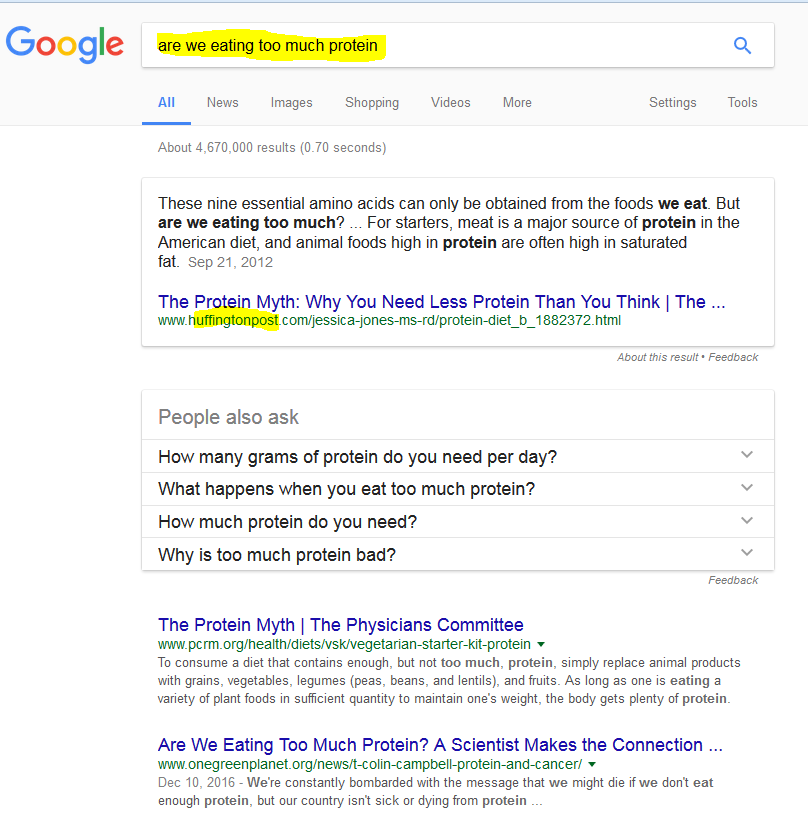
<div class="chapter standard" id="chapter-avoiding-confirmation-bias-in-searches" title="Confirmation Bias"><div class="chapter-title-wrap"><h3 class="chapter-number">7</h3><h2 class="chapter-title">Confirmation Bias</h2></div><div class="ugc chapter-ugc"><h2 class="chapter-author">Mike Caulfield and Kristin Conlin</h2> <p>Was 9/11 a hoax? Let’s find out. We type in ‘was 9/11 a hoax’ into Google’s search box and we get:</p> <p><img class="alignnone wp-image-215 size-full" title="Michael A. Caulfield" src="https://ubalt.pressbooks.pub/app/uploads/sites/4/2017/02/google.png" alt="Google search results for “was 9/11 a hoax” in which the top five sites confirm the conspiracy that 9/11 was faked." width="677" height="679" srcset="https://ubalt.pressbooks.pub/app/uploads/sites/4/2017/02/google.png 677w, https://ubalt.pressbooks.pub/app/uploads/sites/4/2017/02/google-300x300.png 300w, https://ubalt.pressbooks.pub/app/uploads/sites/4/2017/02/google-150x150.png 150w, https://ubalt.pressbooks.pub/app/uploads/sites/4/2017/02/google-65x65.png 65w, https://ubalt.pressbooks.pub/app/uploads/sites/4/2017/02/google-225x226.png 225w, https://ubalt.pressbooks.pub/app/uploads/sites/4/2017/02/google-350x351.png 350w" /></p> <p><strong>&nbsp;</strong></p> <p>Not only does the top result says that the attack on 9/11 was faked–the <em>top five</em> results do. To the untrained eye it looks like the press has been hiding something from you.&nbsp; But of course the 9/11 attacks were not faked. So why does <em>Google</em> return these results?</p> <p>The main reason is the terms used to search the topic. The term “hoax” is applied to the 9/11 attacks primarily on conspiracy sites. So when <em>Google</em> looks for clusters on that term (and links to documents containing that term), it finds that conspiracy sites rank highly.</p> <div class="textbox"><a href="https://en.wikipedia.org/wiki/Confirmation_bias" data-url="https://en.wikipedia.org/wiki/Confirmation_bias">Confirmation bias</a> occurs when a user seeks information that supports the user’s point of view and ignores evidence that provides an alternative perspective.</div> <p>&nbsp;</p> <p><strong>Think about it:</strong> reputable physics journals, policy magazines, and national newspapers are not likely to run headlines asking if the attacks were a hoax, but conspiracy sites use the term liberally.</p> <p>The same holds true even for more benign searches. The question, “Are we eating too much protein” has <em>Google</em> return a panel from the <em>Huffington Post </em>(now&nbsp;<em>HuffPost</em>)&nbsp;and a website from a vegan advocacy group.</p> <p><img class="alignnone wp-image-216 size-full" src="https://ubalt.pressbooks.pub/app/uploads/sites/4/2020/09/confirmation-bias-in-searches.png" alt="Google search results for “are we eating too much protein” in which Google pulls a knowledge panel from Huffington Post, and the top site promotes veganism." width="808" height="818" srcset="https://ubalt.pressbooks.pub/app/uploads/sites/4/2020/09/confirmation-bias-in-searches.png 808w, https://ubalt.pressbooks.pub/app/uploads/sites/4/2020/09/confirmation-bias-in-searches-296x300.png 296w, https://ubalt.pressbooks.pub/app/uploads/sites/4/2020/09/confirmation-bias-in-searches-768x778.png 768w, https://ubalt.pressbooks.pub/app/uploads/sites/4/2020/09/confirmation-bias-in-searches-65x66.png 65w, https://ubalt.pressbooks.pub/app/uploads/sites/4/2020/09/confirmation-bias-in-searches-225x228.png 225w, https://ubalt.pressbooks.pub/app/uploads/sites/4/2020/09/confirmation-bias-in-searches-350x354.png 350w" /></p> <p>&nbsp;</p> <div class="textbox">The biases displayed in the language used to search and the search results is not limited to Google, or internet search engines in general.&nbsp; The bias is in the language used to describe the idea or event.&nbsp; Creators employ that language in commercial packaging, library catalogs, or real estate listings and countless other ways of communicating.</div> <h3>To avoid confirmation bias:</h3> <ul><li><strong>Avoid asking questions that imply a certain answer</strong>. If you ask, “Did the Holocaust happen?,” for example, it is implied that the Holocaust was faked. If you want information on the Holocaust, sometimes it’s better just to start with a simple noun search, e.g. “Holocaust,” and read summaries that show how we know what happened.</li> <li><strong>Avoid using terms that imply a certain answer.</strong> As an example, if you query, “Women 72 cents on the dollar” you’ll likely get articles that tell you <a href="https://www.google.com/search?q=Women+72+cents+on+the+dollar&amp;oq=Women+72+cents+on+the+dollar&amp;aqs=chrome..69i57.327j0j4&amp;sourceid=chrome&amp;ie=UTF-8" data-url="https://www.google.com/search?q=Women+72+cents+on+the+dollar&amp;oq=Women+72+cents+on+the+dollar&amp;aqs=chrome..69i57.327j0j4&amp;sourceid=chrome&amp;ie=UTF-8">women make 72 cents on the dollar</a>. But is you search for “Women 80 cents on the dollar” you’ll get <a href="https://www.google.com/search?num=30&amp;q=Women+80+cents+on+the+dollar&amp;oq=Women+80+cents+on+the+dollar&amp;gs_l=psy-ab.3...10654.12329.0.12625.4.4.0.0.0.0.117.423.2j2.4.0....0...1.1.64.psy-ab..0.1.112...0i8i7i30k1.ezVCX3ZvpKQ" data-url="https://www.google.com/search?num=30&amp;q=Women+80+cents+on+the+dollar&amp;oq=Women+80+cents+on+the+dollar&amp;gs_l=psy-ab.3...10654.12329.0.12625.4.4.0.0.0.0.117.423.2j2.4.0....0...1.1.64.psy-ab..0.1.112...0i8i7i30k1.ezVCX3ZvpKQ">articles that say women make 80 cents on the dollar</a>. Searching for general articles on the “wage gap” &nbsp;might be a better choice.</li> <li><strong>Avoid culturally loaded terms.</strong> As an example, the term “black-on-white crime” is term used by white supremacist groups, but is not a term generally used by sociologists, nor do statistics support this claim. As such, if you put that term into the <em>Google</em>&nbsp;search bar, you are going to get some sites that will carry the perspective of white supremacist sites, and be lousy sources of serious sociological analysis.<br /> If you don’t know if a term or phrase is culturally loaded, pay special attention to and practice the following two steps.</li> <li><strong>Think carefully about what constitutes an authoritative source <em>before you search</em></strong>. Use that criteria to assess your search results.&nbsp; Then, once you acquire search results, use lateral reading techniques to assess the sources you chose to pursue/click on.</li> <li><strong>Scan results for better terms.</strong> Maybe your first question about whether the holocaust happened turned up a lousy result set in general but did pop up a <em>Wikipedia</em> article on Holocaust denialism. Use that term (in this case, “denialism”) to make a better search for what you actually want to know.</li> </ul> </div></div>
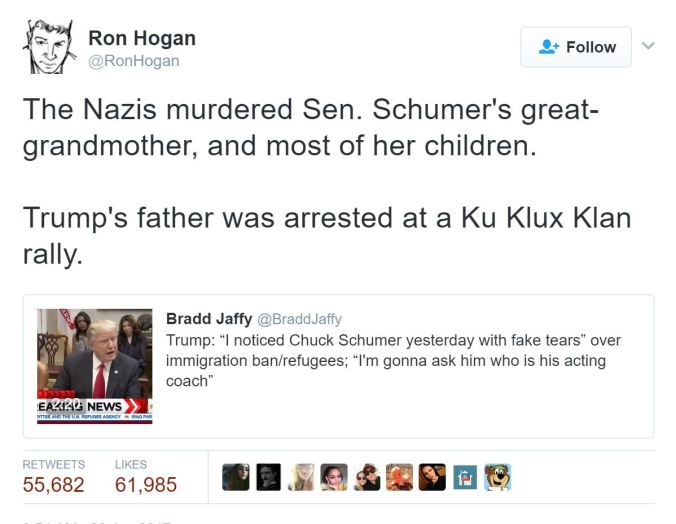
<div class="chapter standard" id="chapter-building-a-habit-by-checking-your-emotions" title="Building a Fact-Checking Habit by Checking Your Emotions"><div class="chapter-title-wrap"><h3 class="chapter-number">8</h3><h2 class="chapter-title">Building a Fact-Checking Habit by Checking Your Emotions</h2></div><div class="ugc chapter-ugc"><h2 class="chapter-author">Mike Caulfield</h2> <p><em>Check your emotions.</em></p> <p>This isn’t quite a strategy (like “go upstream”) or a tactic (like using date filters to find the origin of a fact). For lack of a better word, I am calling this advice a habit.</p> <div class="textbox">The habit is simple. When you feel strong emotion–happiness, anger, pride, vindication–and that emotion pushes you to share a “fact” with others, STOP. Above all, these are the claims that you must fact-check.</div> <p>Why should a person fact check as a habit? Answer: Because you’re already likely to check things you know are important to get right, and you’re predisposed to analyze things that put you an intellectual frame of mind. But things that make you angry or overjoyed, well… our record as humans are not good with these things.</p> <p>As an example, I’ll cite this tweet that crossed my <em>Twitter</em> feed:</p> <div class="wp-caption alignnone" id="attachment_39" aria-describedby="caption-attachment-39" style="width: 676px"><img class="wp-image-39 size-full" title="Mike Caufield" src="https://ubalt.pressbooks.pub/app/uploads/sites/4/2017/02/hogan.jpg" alt="A tweet from Twitter user @RonHogan that reads “The Nazis murdered Senator Schumer’s grandmother and most of her children. Trump’s father was arrested at a Ku Klux Klan rally.”" width="676" height="524" srcset="https://ubalt.pressbooks.pub/app/uploads/sites/4/2017/02/hogan.jpg 676w, https://ubalt.pressbooks.pub/app/uploads/sites/4/2017/02/hogan-300x233.jpg 300w, https://ubalt.pressbooks.pub/app/uploads/sites/4/2017/02/hogan-65x50.jpg 65w, https://ubalt.pressbooks.pub/app/uploads/sites/4/2017/02/hogan-225x174.jpg 225w, https://ubalt.pressbooks.pub/app/uploads/sites/4/2017/02/hogan-350x271.jpg 350w" /><div class="wp-caption-text" id="caption-attachment-39">A tweet from Twitter user @RonHogan that reads “The Nazis murdered Senator Schumer’s grandmother and most of her children. Trump’s father was arrested at a Ku Klux Klan rally.” It is in response to a Donald Trump tweet. It has been retweeted over 55,000 times.</div></div> <p>You don’t need to know much of the background of this tweet to see its emotionally charged nature. President Trump had insulted Chuck Schumer, a Democratic Senator from New York, and characterized the tears that Schumer shed during a statement about refugees as “fake tears.”&nbsp; This tweet reminds us that that Senator Schumer’s great-grandmother died at the hands of the Nazis, which could explain Schumer’s emotional connection to the issue of refugees.</p> <p>Or does it? Do we actually know that Schumer’s great-grandmother died at the hands of the Nazis? And if we are not sure this is true, <a href="https://www.scientificamerican.com/article/everyone-is-an-agent-in-the-new-information-warfare/" data-url="https://www.scientificamerican.com/article/everyone-is-an-agent-in-the-new-information-warfare/">should we really be retweeting it</a>?</p> <p>Our normal inclination is to ignore verification needs when we react&nbsp;strongly to content, and&nbsp;researchers have found that content that causes strong emotions (both positive and negative) spreads the fastest through our social networks.<span class="footnote"><span class="footnote-indirect" data-fnref="40-1"></span></span> Savvy activists and advocates take advantage of this flaw of ours, getting past our filters by posting material that goes straight to our hearts.</p> <p>Use your emotions as a reminder. Strong emotions should become a trigger for your new fact-checking habit. Every time content you want to share makes you feel rage, laughter, ridicule, or even a heartwarming buzz, spend 30 seconds fact-checking.&nbsp; It will do you well.</p> <div class="footnotes"><div id='40-1'>
See "<a href="http://www.smithsonianmag.com/science-nature/what-emotion-goes-viral-fastest-180950182/?no-ist" data-url="http://www.smithsonianmag.com/science-nature/what-emotion-goes-viral-fastest-180950182/?no-ist">What Emotion Goes Viral the Fastest?</a>" by Matthew Shaer.
</div></div></div></div>
<div class="chapter standard" id="chapter-four-strategies" title="Four Moves"><div class="chapter-title-wrap"><h3 class="chapter-number">9</h3><h2 class="chapter-title">Four Moves</h2></div><div class="ugc chapter-ugc"><h2 class="chapter-author">Mike Caulfield and Kristin Conlin</h2> <p>What people need most when confronted with a claim that may not be 100% true is&nbsp;<em>things they can do to get closer to the truth</em>. They need something I have decided to call “moves.”</p> <p>Moves accomplish intermediate goals in the fact-checking process. &nbsp;They are associated with specific tactics. Here are the four moves this guide will hinge on:</p> <ol><li><strong>Check for previous work:&nbsp;</strong>Look around to&nbsp;see if someone else has already fact-checked the claim or provided a synthesis of research.</li> <li><strong>Go upstream to the source:&nbsp;</strong>Go “upstream” to the source of the claim.&nbsp;Most web content is not original. Get to the original source to understand the trustworthiness of the information.</li> <li><strong>Read laterally:&nbsp;</strong>Read laterally.<span class="footnote"><span class="footnote-indirect" data-fnref="37-1"></span></span> Once you get to the source of a claim, read what other people say about the source (publication, author, etc.). The truth is in the network.</li> <li><strong>Circle back:</strong> If you get lost, hit dead ends, or find yourself going down an increasingly confusing rabbit hole, back up and start over knowing what you know now. You’re likely to take a more informed path with different search terms and better decisions.</li> </ol> <p>In general, you can try these moves in sequence. If you find success at any stage, your work might be done.</p> <p>When you encounter a claim you want to check, your first move might be to see if sites like <a href="https://www.politifact.com/" data-url="https://www.politifact.com/"><em>Politifact</em></a>, or <a href="https://www.snopes.com/fact-check/" data-url="https://www.snopes.com/fact-check/"><em>Snopes</em></a>, or even <a href="https://en.wikipedia.org/wiki/Main_Page" data-url="https://en.wikipedia.org/wiki/Main_Page"><em>Wikipedia</em></a> have researched the claim (Check for previous work).</p> <p>If you can’t find previous work on the claim, start by trying to trace the claim to the source. If the claim is about research, try to find the journal the research appeared in (you can do this by looking for citations or places in the text that mentions name of researchers or publication names. If the claim is about an event, try to find the news publication in which it was originally reported (Go upstream).</p> <p>Maybe you get lucky and the source is something known to be reputable, such as the journal <em>Science</em>&nbsp;or the newspaper&nbsp;the<em>&nbsp;New York Times</em>. Again, if so, you can stop there. If not, you’re going to need to&nbsp;<em>read laterally</em>, finding out more about this source you’ve ended up at and asking whether it is trustworthy (Read laterally).</p> <p>And if at any point you fail–if the source you find is not trustworthy, complex questions emerge, or the claim turns out to have multiple sub-claims–then you circle back, and start a new process. Rewrite the claim. Try a new search of fact-checking sites, or find an alternate source (Circle back).</p> <p>&nbsp;</p> <p>&nbsp;</p> <p>&nbsp;</p> <div class="footnotes"><div id='37-1'>I am indebted to researcher Sam Wineburg for this language.</div></div></div></div>
<div class="chapter standard" id="chapter-what-reading-laterally-means" title="What “Reading Laterally” Means"><div class="chapter-title-wrap"><h3 class="chapter-number">10</h3><h2 class="chapter-title">What “Reading Laterally” Means</h2></div><div class="ugc chapter-ugc"><h2 class="chapter-author">Mike Caulfield and Kristin Conlin</h2> <p>Good fact-checkers <strong>read laterally</strong>, across many connected sites instead of digging deep into the site at hand.</p> <p>When you start to read a book, a journal article, or a physical newspaper,&nbsp; you already know quite a bit about your source. You subscribed to the newspaper, or picked it up from a newsstand because you recognize the name. You ordered the book or purchased it from a local bookstore because it was a book you were interested in reading or it was recommended to you based on your interests. In other words, when you get to the document you need to evaluate, the process of getting there has already given you some initial bearings.</p> <p>The breadcrumbs of information described above is different from web reading which is more like teleportation. Even after following a source upstream, you arrive at a page, site, and author that are often all unknown to you. How do you analyze the author’s qualifications or the trustworthiness of the site?</p> <p>Researchers have found that most people go about this the wrong way. When confronted with a new site, they poke around the site and try to find out what the site says about itself by going to the “about page,” clicking around in onsite author biographies, or scrolling up and down the page. This is a faulty strategy for two reasons:</p> <ol><li>First, if the site is untrustworthy, then what the site says about itself is most likely untrustworthy, as well.</li> <li>Even if the site is generally trustworthy, it is inclined to paint the most favorable picture of its expertise and credibility possible.</li> </ol> <p>The solution to this is, in the words of Sam Wineburg’s Stanford research team, to <strong><span class="glossary-term">read laterally</span>.</strong> Lateral readers don’t spend time on the page or site until they’ve first gotten their bearings by looking at what other sites and resources say about the source at which they are looking.</p> <div class="textbox shaded"><strong>For example,</strong> when presented with a new site that needs to be evaluated, professional fact-checkers don’t spend much time on the site itself. Instead they get off the page and see what other authoritative sources have said about the site. They open up many tabs in their browser, piecing together different bits of information from across the web to get a better picture of the site they’re investigating. Many of the questions they ask are the same as the vertical readers scrolling up and down the pages of the source they are evaluating. But unlike those readers, they realize that the truth is more likely to be found in the network of links to (and commentaries about) the site than in the site itself.<br /> Only when they’ve gotten their bearings from the rest of the network do they re-engage with the content. Lateral readers gain a better understanding as to whether to trust the facts and analysis presented to them.</div> <p></p> <div class="textbox interactive-content"><span class="interactive-content__icon"></span> <p>An interactive or media element has been excluded from this version of the text. You can view it online here: <a href="https://ubalt.pressbooks.pub/strategicil/?p=121#pb-interactive-content" title="What “Reading Laterally” Means" data-url="https://ubalt.pressbooks.pub/strategicil/?p=121#pb-interactive-content">https://ubalt.pressbooks.pub/strategicil/?p=121</a> </p> </div> <span class="footnote"><span class="footnote-indirect" data-fnref="121-1"></span></span> <p>You can tell lateral readers at work:</p> <ul><li>They have multiple tabs open.</li> <li>They perform web searches on the author of the piece <strong>and</strong> the ownership of the site.</li> <li>They also look at pages linking to the site, not just pages coming from it.</li> </ul> <p>Lateral reading helps the reader understand both the perspective from which the site’s analyses come and if the site has an editorial process or expert reputation that would allow one to accept the truth of a site’s facts.</p> <p>We’re going to deal with the latter issue of factual reliability, while noting that lateral reading is just as important for the first issue.</p> <div class="footnotes"><div id='121-1'>Stanford History Education Group (2020 Jan 16) Sort Fact from Fiction Online with Lateral Reading [Video]. Youtube. https://youtu.be/SHNprb2hgzU</div></div></div></div>
<div class="chapter standard" id="chapter-go-upstream-to-find-the-source" title="Go Upstream to Find the Source"><div class="chapter-title-wrap"><h3 class="chapter-number">11</h3><h2 class="chapter-title">Go Upstream to Find the Source</h2></div><div class="ugc chapter-ugc"><h2 class="chapter-author">Mike Caulfield</h2> <p>Our second move, after finding previous fact-checking work, is to “go upstream.”&nbsp; We use this move if previous fact-checking work was insufficient for our needs.</p> <p>What do we mean by “go upstream”?</p> <p>Consider this claim on the conservative site the<em>&nbsp;Blaze</em>:</p> <p><img class="wp-image-56 size-full" src="https://ubalt.pressbooks.pub/app/uploads/sites/4/2017/02/tr.jpg" alt="Headline of an online article" width="669" height="627" srcset="https://ubalt.pressbooks.pub/app/uploads/sites/4/2017/02/tr.jpg 669w, https://ubalt.pressbooks.pub/app/uploads/sites/4/2017/02/tr-300x281.jpg 300w, https://ubalt.pressbooks.pub/app/uploads/sites/4/2017/02/tr-65x61.jpg 65w, https://ubalt.pressbooks.pub/app/uploads/sites/4/2017/02/tr-225x211.jpg 225w, https://ubalt.pressbooks.pub/app/uploads/sites/4/2017/02/tr-350x328.jpg 350w" /></p> <p><a href="#figure_8a" data-url="/chapter/image-descriptions/#figure_8a">Figure 6</a></p> <p>Is this claim true?</p> <p>Of course we can check the credibility of this article by considering the author, the site, and when it was last revised.&nbsp;We’ll do some of that, eventually. But it would be ridiculous to do it on this page. Why? Because like most news pages on the web, this one provides no original information. It’s just a rewrite of an upstream page. We see the indication of that here:</p> <p><img class="wp-image-57 size-full" src="https://ubalt.pressbooks.pub/app/uploads/sites/4/2020/09/asdf.jpg" alt="Text from Daily Dot, with sentences highlighted." width="923" height="318" srcset="https://ubalt.pressbooks.pub/app/uploads/sites/4/2020/09/asdf.jpg 923w, https://ubalt.pressbooks.pub/app/uploads/sites/4/2020/09/asdf-300x103.jpg 300w, https://ubalt.pressbooks.pub/app/uploads/sites/4/2020/09/asdf-768x265.jpg 768w, https://ubalt.pressbooks.pub/app/uploads/sites/4/2020/09/asdf-65x22.jpg 65w, https://ubalt.pressbooks.pub/app/uploads/sites/4/2020/09/asdf-225x78.jpg 225w, https://ubalt.pressbooks.pub/app/uploads/sites/4/2020/09/asdf-350x121.jpg 350w" /></p> <p><a href="#figure_9a" data-url="/chapter/image-descriptions/#figure_9a">Figure 7</a></p> <p>All the information here has been collected, fact-checked (we hope!), and written up by the <em>Daily Dot</em>. It’s what we call “reporting on reporting.” There’s no point in evaluating the <em>Blaze’s</em> page.</p> <p>So what do we do? Our first step is to go upstream. Go to the original story and evaluate it. When you get to the <em>Daily Dot</em>, then you can start asking questions about the site or the source. And it may be that for some of the information in the <em>Daily Dot</em> article you’d want to go a step further back and check their primary sources. But you have to start there, not here.</p> </div></div>
<div class="chapter standard" id="chapter-how-to-think-about-research" title="Research as discovery and fact checking"><div class="chapter-title-wrap"><h3 class="chapter-number">12</h3><h2 class="chapter-title">Research as discovery and fact checking</h2></div><div class="ugc chapter-ugc"><h2 class="chapter-author">Mike Caulfield and Kristin Conlin</h2><p>People tend to think that newer is better with everything. Sometimes this is true: new phones are better than old phones and new textbooks are often more up-to-date than old textbooks. But the understanding many students have about scholarly articles is that the newer studies “replace” the older studies. You see this assumption in the headline: “It’s Official: European Scientific Journal Concludes…”</p> <p>In general, that’s not how science works. In science, multiple conflicting studies come in over long periods of time, each one a drop in the bucket of the claim it supports. Over time, the weight of the evidence ends up on one side or another. Depending on the quality of the new research, some drops are bigger than others (some much bigger), but overall it is an incremental process.</p> <p>As such, studies that are consistent with previous research are often more trustworthy than those that have surprising or unexpected results. This runs counter to the narrative promoted by the press: “news,” after all, favors what is new and different. The unfortunate effect of the press’s presentation of science (and in particular science around popular issues such as health) is that they would rather not give a sense of the slow accumulation of evidence for each side of an issue. Their narrative often presents a world where last month’s findings are “overturned” by this month’s findings, which are then, in turn, “overturned” back to the original finding a month from now. This whiplash presentation “Chocolate is good for you! Chocolate is bad for you!” undermines the public’s faith in science. But the whiplash is not from science: it is a product of the inappropriate presentation from the press.</p> <p>As a fact-checker, your job is not to resolve debates based on new evidence, but to accurately summarize the state of research and the consensus of experts in a given area, taking into account majority and significant minority views.</p> <div class="textbox">Fact-checking communities such as <em>Wikipedia</em> discourage authors from over-citing individual research, which tends to point in different directions. Instead, <em>Wikipedia</em> encourages users to find high quality secondary sources that reliably summarize the research base of a certain area, or research reviews of multiple works. This is good advice for fact-checkers as well. Without an expert’s background, it can be challenging to place new research in the context of old, which is what you want to do.</div> <p>Here’s a claim (two claims, actually) that ran recently in the <em>Washington Post</em>:</p> <blockquote><p>The alcohol industry and some government agencies continue to promote <strong>the idea that moderate drinking provides some health benefits (1)</strong>. But <strong>new research is beginning to call even that long-standing claim into question (2)</strong>.</p></blockquote> <p>Reading down further, we find a more specific claim: the medical consensus is that alcohol is a carcinogen even at low levels of consumption. Is this true?</p> <p>The first thing we do is look at the authorship of the article:</p> <ul><li>It’s from the <em>Washington Post</em>, which is a generally reliable publication</li> <li>One of its authors has made a career of data analysis (and actually won a Pulitzer prize as part of a team that analyzed data and discovered election fraud in a Florida mayoral race).<br /> *So one thing to think about is that these authors may be better interpreters of the data than you. (Key thing for fact-checkers to keep in mind: You are often not a person in a position to know.)</li> </ul> <p>But suppose we want to dig further and find out if they are really looking at a shift in the expert consensus, or just adding more drops to the evidence bucket. How would we do that?</p> <p>First, we’d sanity check where the pieces they mention were published. The <em>Post</em> article mentions two articles by “Jennie Connor, a professor at the University of Otago Dunedin School of Medicine,” one published last year and the other published earlier. Let’s find the more recent one, which seems to be a key input into this article. We go to <em>Google Scholar</em> and type in “‘Jennie Connor’ 2016”:</p> <p><img class="alignnone wp-image-143 size-full" title="Mike Caulfield" src="https://ubalt.pressbooks.pub/app/uploads/sites/4/2017/02/image44.png" alt="The Google Scholar search results for “Jennie Connor 2016,” which shows her well-cited publications. Her 2017 article received 12 citations, and two articles were cited by 23 and 36 others." width="1768" height="1038" srcset="https://ubalt.pressbooks.pub/app/uploads/sites/4/2017/02/image44.png 1768w, https://ubalt.pressbooks.pub/app/uploads/sites/4/2017/02/image44-300x176.png 300w, https://ubalt.pressbooks.pub/app/uploads/sites/4/2017/02/image44-1024x601.png 1024w, https://ubalt.pressbooks.pub/app/uploads/sites/4/2017/02/image44-768x451.png 768w, https://ubalt.pressbooks.pub/app/uploads/sites/4/2017/02/image44-1536x902.png 1536w, https://ubalt.pressbooks.pub/app/uploads/sites/4/2017/02/image44-65x38.png 65w, https://ubalt.pressbooks.pub/app/uploads/sites/4/2017/02/image44-225x132.png 225w, https://ubalt.pressbooks.pub/app/uploads/sites/4/2017/02/image44-350x205.png 350w" /></p> <p>As usual, we’re scanning quickly to get to the article we want, but also minding our peripheral vision here. So, we see that the top one is what we probably want, but we also notice that Connor has other well-cited articles in the field of health.</p> <p>What about this article on “Alcohol consumption as a cause of cancer”? It was published in 2017 (which is probably the physical journal’s publication date, the article having been released in 2016). Nevertheless, it’s already been cited by twelve other papers.</p> <p>What about this publication <em>Addiction</em>? Is it reputable?</p> <p>Let’s take a look with an impact factor search.</p> <p><img class="alignnone wp-image-144 size-full" title="Mike Caulfield" src="https://ubalt.pressbooks.pub/app/uploads/sites/4/2020/09/image06.png" alt="The Google search results for “addiction impact factor,” which we find in the knowledge panel to be 4.145 as of 2010." width="1999" height="809" srcset="https://ubalt.pressbooks.pub/app/uploads/sites/4/2020/09/image06.png 1999w, https://ubalt.pressbooks.pub/app/uploads/sites/4/2020/09/image06-300x121.png 300w, https://ubalt.pressbooks.pub/app/uploads/sites/4/2020/09/image06-1024x414.png 1024w, https://ubalt.pressbooks.pub/app/uploads/sites/4/2020/09/image06-768x311.png 768w, https://ubalt.pressbooks.pub/app/uploads/sites/4/2020/09/image06-1536x622.png 1536w, https://ubalt.pressbooks.pub/app/uploads/sites/4/2020/09/image06-65x26.png 65w, https://ubalt.pressbooks.pub/app/uploads/sites/4/2020/09/image06-225x91.png 225w, https://ubalt.pressbooks.pub/app/uploads/sites/4/2020/09/image06-350x142.png 350w" /></p> <p>Yep, it looks legit. We also see in the knowledge panel to the right that the journal was founded in the 1880s. If we click through to that <em>Wikipedia</em> article, it will tell us that this journal ranks second in impact factor for journals on substance abuse.</p> <p>Again, you should never use impact factor for fine-grained distinctions. What we’re checking for here is that the <em>Washington Post</em> wasn’t fooled into covering some research far out of the mainstream of substance abuse studies, or tricked into covering something published in a sketchy journal. It’s clear from this quick check that this is a researcher well within the mainstream of her profession, publishing in prominent journals.</p> <p>Next we want to see what kind of article this is. Sometimes journals publish short reactions to other works, or smaller opinion pieces. What we’d like to see here is that this was either new research or a substantial review of research. We find from the abstract that it is primarily a review of research, including some of the newer studies. We note that it is a six-page article, and therefore not likely to be a simple letter or response to another article. The abstract also goes into detail about the breadth of evidence reviewed.</p> <p>Frustratingly, we can’t get our hands on the article, but this probably tells us enough about it for our purposes.</p> </div></div>
<div class="chapter standard" id="chapter-how-to-use-previous-work" title="How to Use Previous Work"><div class="chapter-title-wrap"><h3 class="chapter-number">13</h3><h2 class="chapter-title">How to Use Previous Work</h2></div><div class="ugc chapter-ugc"><h2 class="chapter-author">Mike Caulfield</h2> <p>When fact-checking a particular claim, quote, or article, the simplest thing you can do is to see if someone has already done the work for you.</p> <p>This doesn’t mean you have to accept their finding. Maybe they assign a claim “four Pinocchios,” but you would rate it three. Maybe they find the truth “mixed,” but honestly it looks “mostly false” to you.</p> <p>Regardless of the finding, a reputable fact-checking site or subject wiki will have done much of the leg work for you: tracing claims to their source, identifying the owners of various sites, and linking to reputable sources for counterclaims. And that legwork, no matter what the finding, is probably worth ten times your intuition. If the claims and the evidence they present ring true to you, or if you have built up a high degree of trust in the site, then you can treat the question as closed. But even if you aren’t satisfied, you can start your work from where they left off.</p> <h2>Constructing a Query to Find Previous Fact-Checking</h2> <p>You can find previous fact-checking by using the “site” option in search engines such as <em>Google</em> and <em>DuckDuckGo</em> to search known and trusted fact-checking sites for a given phrase or keyword. For example, if you see this story,</p> <p><img class="wp-image-44 size-full" src="https://ubalt.pressbooks.pub/app/uploads/sites/4/2017/02/obamaban.jpg" alt="Online Article." width="1968" height="980" srcset="https://ubalt.pressbooks.pub/app/uploads/sites/4/2017/02/obamaban.jpg 1968w, https://ubalt.pressbooks.pub/app/uploads/sites/4/2017/02/obamaban-300x149.jpg 300w, https://ubalt.pressbooks.pub/app/uploads/sites/4/2017/02/obamaban-1024x510.jpg 1024w, https://ubalt.pressbooks.pub/app/uploads/sites/4/2017/02/obamaban-768x382.jpg 768w, https://ubalt.pressbooks.pub/app/uploads/sites/4/2017/02/obamaban-1536x765.jpg 1536w, https://ubalt.pressbooks.pub/app/uploads/sites/4/2017/02/obamaban-65x32.jpg 65w, https://ubalt.pressbooks.pub/app/uploads/sites/4/2017/02/obamaban-225x112.jpg 225w, https://ubalt.pressbooks.pub/app/uploads/sites/4/2017/02/obamaban-350x174.jpg 350w" /></p> <p><a href="#figure_4a" data-url="/chapter/image-descriptions/#figure_4a">Figure 2</a></p> <p>then you might use this query, which checks a couple known fact-checking sites for the keywords: obama iraqi refugee ban 2011. Let’s use the <em>DuckDuckGo</em> search engine to look for the keywords:</p> <blockquote><p>obama iraqi visa ban 2011 site:snopes.com site:politifact.com</p></blockquote> <p>Here are the results of our search:</p> <p><img class="wp-image-45" src="https://ubalt.pressbooks.pub/app/uploads/sites/4/2020/09/search-sites.jpg" alt="Screenshot of DuckDuckGo search results. The top results are from fact-checking sites Snopes and Politifact." width="738" height="687" srcset="https://ubalt.pressbooks.pub/app/uploads/sites/4/2020/09/search-sites.jpg 1457w, https://ubalt.pressbooks.pub/app/uploads/sites/4/2020/09/search-sites-300x279.jpg 300w, https://ubalt.pressbooks.pub/app/uploads/sites/4/2020/09/search-sites-1024x953.jpg 1024w, https://ubalt.pressbooks.pub/app/uploads/sites/4/2020/09/search-sites-768x715.jpg 768w, https://ubalt.pressbooks.pub/app/uploads/sites/4/2020/09/search-sites-65x60.jpg 65w, https://ubalt.pressbooks.pub/app/uploads/sites/4/2020/09/search-sites-225x209.jpg 225w, https://ubalt.pressbooks.pub/app/uploads/sites/4/2020/09/search-sites-350x326.jpg 350w" /></p> <p><a href="#figure_5a" data-url="/chapter/image-descriptions/#figure_5a">Figure 3</a></p> <p>You can see the search <a href="https://duckduckgo.com/?q=obama+iraqi+visa+ban+2011+site%3Asnopes.com+site%3Apolitifact.com&amp;t=hd&amp;ia=web" data-url="https://duckduckgo.com/?q=obama+iraqi+visa+ban+2011+site%3Asnopes.com+site%3Apolitifact.com&amp;t=hd&amp;ia=web">here</a>. The results show that work has already been done in this area. In fact, the first result from <em>Snopes</em> answers our question almost fully. Remember to follow best search engine practice: scan the results and focus on the URLs and the blurbs to find the best result to click in the returned result set.</p> <p>There are similar syntaxes you can use in <em>Google</em>, but for various reasons this particular search is easier in <em>DuckDuckGo</em>.</p> <p>Let’s look at another claim, this time from the President. This claim is that police officer deaths increased 56 percent from 2015 to 2016. Here it is in context:</p> <p><img class="wp-image-46" src="https://ubalt.pressbooks.pub/app/uploads/sites/4/2020/09/56.jpg" alt="Excerpt of Trump Speech on web page." width="547" height="188" srcset="https://ubalt.pressbooks.pub/app/uploads/sites/4/2020/09/56.jpg 1322w, https://ubalt.pressbooks.pub/app/uploads/sites/4/2020/09/56-300x103.jpg 300w, https://ubalt.pressbooks.pub/app/uploads/sites/4/2020/09/56-1024x352.jpg 1024w, https://ubalt.pressbooks.pub/app/uploads/sites/4/2020/09/56-768x264.jpg 768w, https://ubalt.pressbooks.pub/app/uploads/sites/4/2020/09/56-65x22.jpg 65w, https://ubalt.pressbooks.pub/app/uploads/sites/4/2020/09/56-225x77.jpg 225w, https://ubalt.pressbooks.pub/app/uploads/sites/4/2020/09/56-350x120.jpg 350w" /></p> <p><a href="#figure_6a" data-url="/chapter/image-descriptions/#figure_6a">Figure 4</a></p> <p>Let’s ramp it up with a query that checks four different fact-checking sites:</p> <blockquote><p>officer deaths 2016 increased 56 percent from 2015 site:factcheck.org site:snopes.com site:politifact.com site:www.washingtonpost.com/news/fact-checker/</p></blockquote> <p>This gives us back a helpful array of results. The first, from the <em>Washington</em> <em>Post</em>, actually answers our question directly, but some of the others provide some helpful context as well.</p> <p><img class="wp-image-47" src="https://ubalt.pressbooks.pub/app/uploads/sites/4/2020/09/trump-cops.jpg" alt="Duck Duck Go search results." width="754" height="670" srcset="https://ubalt.pressbooks.pub/app/uploads/sites/4/2020/09/trump-cops.jpg 1534w, https://ubalt.pressbooks.pub/app/uploads/sites/4/2020/09/trump-cops-300x267.jpg 300w, https://ubalt.pressbooks.pub/app/uploads/sites/4/2020/09/trump-cops-1024x911.jpg 1024w, https://ubalt.pressbooks.pub/app/uploads/sites/4/2020/09/trump-cops-768x683.jpg 768w, https://ubalt.pressbooks.pub/app/uploads/sites/4/2020/09/trump-cops-65x58.jpg 65w, https://ubalt.pressbooks.pub/app/uploads/sites/4/2020/09/trump-cops-225x200.jpg 225w, https://ubalt.pressbooks.pub/app/uploads/sites/4/2020/09/trump-cops-350x311.jpg 350w" /></p> <p><a href="#figure_7a" data-url="/chapter/image-descriptions/#figure_7a">Figure 5</a></p> <p>Going to the <em>Washington Post</em>&nbsp;lets us know that this claim is, for all intents and purposes, true. We don’t need to go further, unless we want to.</p> </div></div>
<div class="chapter standard" id="chapter-understanding-astroturf" title="Understanding Astroturf"><div class="chapter-title-wrap"><h3 class="chapter-number">14</h3><h2 class="chapter-title">Understanding Astroturf</h2></div><div class="ugc chapter-ugc"><h2 class="chapter-author">Mike Caulfield</h2> <p>“Grassroots” political efforts emerge from the “bottom-up,” with small local groups banding together to put pressure on city, county, state, or federal government to take (or oppose) specific action. They are “people-powered,” usually relying on volunteer labor and small donations from local people and organizations. In the age of social media, the phrase “grassroots” has also been applied to national movements that start by a small group of citizens organizing online.</p> <p>Being “grassroots” is not a technique limited to Republicans or Democrats. The Tea Party revolts against President Obama’s health care plan, for example, had <a href="https://en.wikipedia.org/wiki/Tea_Party_movement#Organization" data-url="https://en.wikipedia.org/wiki/Tea_Party_movement#Organization">many grassroots elements</a>, being organized on the local level by loosely connected people and local organizations. <a href="http://people.com/crime/shannon-watts-moms-demand-action-gun-violence/" data-url="http://people.com/crime/shannon-watts-moms-demand-action-gun-violence/">Moms Demand Action</a>, a gun control advocacy group, was started when a stay-at-home mother was shocked by her son’s response to the Sandy Hook school shooting. She put up a <em>Facebook</em> page to organize action, and slowly built a movement.</p> <p>Citizens tend to look more favorably upon people-powered, local politics than corporate funded initiatives funded by people from somewhere else. The desire to portray corporate and non-local efforts as local has led to a practice called <a href="https://en.wikipedia.org/wiki/Astroturfing" data-url="https://en.wikipedia.org/wiki/Astroturfing">astroturfing</a>, where large corporations or rich individuals use “front groups” that look like local groups of activists, but are funded and organized primarily by national corporations or rich individuals from elsewhere.</p> <p>When deciding whether an organization is astroturfing, consider the following:</p> <ul><li>Who funded it (Was it a corporation, national foundation, or local money?)</li> <li>Who founded it (Was it founded locally, and by whom?)</li> <li>What interest that group might have in the action or initiative proposed (Is it financial, for instance, or related to larger social concerns?)</li> </ul> <p>There is a bit of a sliding scale here for what qualifies as astroturfing. A locally founded initiative that receives primarily national money is (a bit) less astro-turfy than an organization founded directly by a corporation. An initiative that receives money from a foundation dedicated to a larger social goal (such as elimination of poverty) is less astro-turfy than a corporation spending money to boost its stock price or get rid of regulations that constrain it. In general, what is most important is whether the organization’s reality matches the story that they are publicly telling.</p> <p>&nbsp;</p> </div></div>
<div class="chapter standard" id="chapter-verifying-twitter-identity" title="Verifying Twitter Identity"><div class="chapter-title-wrap"><h3 class="chapter-number">15</h3><h2 class="chapter-title">Verifying Twitter Identity</h2></div><div class="ugc chapter-ugc"><h2 class="chapter-author">Mike Caulfield</h2> <p>One&nbsp;relatively common form of misinformation is the fake celebrity retweet. Sometimes this happens by accident–a person mistakenly retweets a parody account as real. Sometimes this happens by design, with an account faking a retweet. Here are some tips to make sure that the tweet you are looking at on <em>Twitter</em> is from the person you are attributing it to.</p> <h2><em>Twitter </em>Identity Basics</h2> <p>With <em>Twitter</em>, accounts are generally (although not always) run by a single person. However, unlike <em>Facebook</em>, <em>Twitter</em> does not enforce a “real name” policy, which makes it easy for one person to run multiple accounts, and to run accounts under different names. In fact, an important part of <em>Twitter</em> culture is the constellation of parody accounts, bots, and single issue accounts that amuse and inform <em>Twitter</em> subscribers.</p> <p>At the same time, it’s easy to get confused. As an example, consider the account of Representative Jack Kimble. Here’s a typical tweet:</p> <p><img class="alignnone size-full wp-image-159" src="https://ubalt.pressbooks.pub/app/uploads/sites/4/2017/02/wars.jpg" alt="" width="550" height="172" srcset="https://ubalt.pressbooks.pub/app/uploads/sites/4/2017/02/wars.jpg 550w, https://ubalt.pressbooks.pub/app/uploads/sites/4/2017/02/wars-300x94.jpg 300w, https://ubalt.pressbooks.pub/app/uploads/sites/4/2017/02/wars-65x20.jpg 65w, https://ubalt.pressbooks.pub/app/uploads/sites/4/2017/02/wars-225x70.jpg 225w, https://ubalt.pressbooks.pub/app/uploads/sites/4/2017/02/wars-350x109.jpg 350w" /></p> <p><a href="#figure_77a" data-url="/chapter/image-descriptions/#figure_77a">Figure 71</a></p> <p>If you’re a liberal, looking at this tweet may get your blood boiling. How can anyone possibly believe this? Especially a Representative?</p> <p>Scanning&nbsp;the Twitter bio doesn’t help.</p> <p><img class="alignnone size-full wp-image-160" src="https://ubalt.pressbooks.pub/app/uploads/sites/4/2020/09/jack.jpg" alt="" width="271" height="418" srcset="https://ubalt.pressbooks.pub/app/uploads/sites/4/2020/09/jack.jpg 271w, https://ubalt.pressbooks.pub/app/uploads/sites/4/2020/09/jack-194x300.jpg 194w, https://ubalt.pressbooks.pub/app/uploads/sites/4/2020/09/jack-65x100.jpg 65w, https://ubalt.pressbooks.pub/app/uploads/sites/4/2020/09/jack-225x347.jpg 225w" /></p> <p>Figure 72</p> <p>Here we see that he’s from the 54th District of California and he’s got a book out. Now if we’re reading carefully we might notice some fishy things here: his book,&nbsp;<em>Profiles in Courageousness</em>,&nbsp;seems like a parodic re-titling of Jack Kennedy’s&nbsp;<em>Profiles in Courage</em>. “E pluribus unum,” which means “From the many, one,” is translated to “1 nation under God”.</p> <p>Oh, also: California <a href="https://en.wikipedia.org/wiki/California's_congressional_districts" data-url="https://en.wikipedia.org/wiki/California's_congressional_districts">only has 53 districts</a>.</p> <p>Unfortunately, you’ll likely be in such a huff about the comments that you won’t notice any of these things. So what is a general purpose indicator that you need to slow down? In most cases, it’s going to be the absence of a “verified account” marker.</p> <h2>Checking Verified Accounts</h2> <p>As a counter-example to “Representative Kimble,” here’s a real representative, Jason Chaffetz, from Utah’s 3rd District.</p> <p><img class="alignnone size-full wp-image-161" src="https://ubalt.pressbooks.pub/app/uploads/sites/4/2020/09/ut.jpg" alt="" width="297" height="511" srcset="https://ubalt.pressbooks.pub/app/uploads/sites/4/2020/09/ut.jpg 297w, https://ubalt.pressbooks.pub/app/uploads/sites/4/2020/09/ut-174x300.jpg 174w, https://ubalt.pressbooks.pub/app/uploads/sites/4/2020/09/ut-65x112.jpg 65w, https://ubalt.pressbooks.pub/app/uploads/sites/4/2020/09/ut-225x387.jpg 225w" /></p> <p><a href="#figure_79a" data-url="/chapter/image-descriptions/#figure_79a">Figure 73</a></p> <p>That little blue seal with the check mark (the “verified badge”) indicates that this is a “verified identity” by <em>Twitter</em>—<em>Twitter</em> asserts that this person has proved they are who they say they are.</p> <p>Who gets to get verified? It’s a bit unclear. <a href="https://support.twitter.com/articles/119135" data-url="https://support.twitter.com/articles/119135"><em>Twitter</em> puts it this way</a>:</p> <blockquote><p>An account may be verified if it is determined to be an account of public interest. Typically this includes accounts maintained by users in music, acting, fashion, government, politics, religion, journalism, media, sports, business, and other key interest areas.</p></blockquote> <p>However, all members of Congress and senior administration officials qualify for such status. So do most major public figures and prominent writers. If you don’t see the blue badge, either disregard the tweet as suspicious, or do further research.</p> <p>One additional note: sometimes people try to fake these indicators; an example is faking a verification symbol in a header.</p> <p><img class="alignnone size-full wp-image-162" src="https://ubalt.pressbooks.pub/app/uploads/sites/4/2020/09/twitter-fake-verified.jpg" alt="" width="498" height="306" srcset="https://ubalt.pressbooks.pub/app/uploads/sites/4/2020/09/twitter-fake-verified.jpg 498w, https://ubalt.pressbooks.pub/app/uploads/sites/4/2020/09/twitter-fake-verified-300x184.jpg 300w, https://ubalt.pressbooks.pub/app/uploads/sites/4/2020/09/twitter-fake-verified-65x40.jpg 65w, https://ubalt.pressbooks.pub/app/uploads/sites/4/2020/09/twitter-fake-verified-225x138.jpg 225w, https://ubalt.pressbooks.pub/app/uploads/sites/4/2020/09/twitter-fake-verified-350x215.jpg 350w" /></p> <p>Figure 74</p> <p>This user has used their background image to place a verification badge next to their name. To steer clear of these sort of hacks, always view the badge in the sidebar or small “hover” card, not the header. To be extra sure it’s legit, hover your cursor over it– the words “verified account” should pop up.</p> <p>This sounds complicated, but once you learn it, it takes maybe two seconds. Here I am, for example, checking to see if this is really New York Governor Andrew Cuomo’s Spotify playlist, or a fake account, using a quick hover technique:</p> <div class="textbox interactive-content interactive-content--oembed"><img src="https://i.ytimg.com/vi/twbHgKlDLoc/hqdefault.jpg" alt="Thumbnail for the embedded element &quot;Checking a Verification Badge in Twitter&quot;" title="Checking a Verification Badge in Twitter" /> <p>A YouTube element has been excluded from this version of the text. You can view it online here: <a href="https://ubalt.pressbooks.pub/strategicil/?p=169#pb-interactive-content" title="Checking a Verification Badge in Twitter" data-url="https://ubalt.pressbooks.pub/strategicil/?p=169#pb-interactive-content">https://ubalt.pressbooks.pub/strategicil/?p=169</a> </p> </div> <p>Figure 75</p> <p>In this case it’s verified. The governor should probably lay off Billy Joel a bit, but this is a legitimate tweet.</p> <p>&nbsp;</p> <h2>Other Methods</h2> <p>Not all celebrities have verified accounts. If you don’t find the verification badge, you may have to dig a little deeper.</p> <div class="textbox"><p>There are a couple things to look for in an unverified account:</p> <ul><li><strong>Start date</strong>: Did the user fire up this account six weeks ago? In general, older accounts are more trustworthy.</li> <li><strong>Followers:</strong> Not always a perfect metric, but do the number of followers seem about right for the personality’s popularity? Do they have any followers you know?</li> <li><strong>Previous Tweets:</strong> Are there many previous tweets, and are they what you’d expect from the account? Do they have conversations with people in ways that you’d expect?</li> </ul> </div> <p>&nbsp;</p> <p>As an example, here is the Minerva Schools <em>Twitter</em> account. Minerva is a small, but high-profile school in California. The account is not verified. Is the account legitimate? Is it really Minerva?</p> <p><img class="alignnone size-full wp-image-163" src="https://ubalt.pressbooks.pub/app/uploads/sites/4/2020/09/followers.jpg" alt="" width="315" height="559" srcset="https://ubalt.pressbooks.pub/app/uploads/sites/4/2020/09/followers.jpg 315w, https://ubalt.pressbooks.pub/app/uploads/sites/4/2020/09/followers-169x300.jpg 169w, https://ubalt.pressbooks.pub/app/uploads/sites/4/2020/09/followers-65x115.jpg 65w, https://ubalt.pressbooks.pub/app/uploads/sites/4/2020/09/followers-225x399.jpg 225w" /></p> <p><a href="#figure_82a" data-url="/chapter/image-descriptions/#figure_82a">Figure 76</a></p> <p>A number of things suggest it is. It was created in August 2013, right around when I know Minerva was created. It has followers I know (from educational technology, which is what the school is known for). One of the followers is a person that I know that works there.</p> <p><img class="alignnone size-full wp-image-164" src="https://ubalt.pressbooks.pub/app/uploads/sites/4/2020/09/minerva.jpg" alt="" width="610" height="641" srcset="https://ubalt.pressbooks.pub/app/uploads/sites/4/2020/09/minerva.jpg 610w, https://ubalt.pressbooks.pub/app/uploads/sites/4/2020/09/minerva-285x300.jpg 285w, https://ubalt.pressbooks.pub/app/uploads/sites/4/2020/09/minerva-65x68.jpg 65w, https://ubalt.pressbooks.pub/app/uploads/sites/4/2020/09/minerva-225x236.jpg 225w, https://ubalt.pressbooks.pub/app/uploads/sites/4/2020/09/minerva-350x368.jpg 350w" /></p> <p><a href="#figure_83a" data-url="/chapter/image-descriptions/#figure_83a">Figure 77</a></p> <p>We could stop there, or we could also note that the tweetstream is entirely consistent with what we’d expect for an organization like this, and the number of followers, while not huge, is in line with what we might expect for an account like this.</p> <p>No one single factor here clinches it (although the employee showing up in the follow list comes close), but all these factors together give us a fair amount of confidence that this is a legitimate account.</p> <p>If we wanted to go one step further (and we really don’t have to here) we could web search the handle and see if it is referenced from any official pages.</p> <p>&nbsp;</p> <h2>Fake Screenshots</h2> <p>Sometimes people fake screenshots of tweets that never happened.</p> <p>Not all tweet screenshots are fake. Many times <em>Twitter</em> users will screenshot a tweet rather than retweet&nbsp;it because they fear the original will be deleted. Here’s Michael Li screenshotting an embarrassing tweet which was later deleted.</p> <p><img class="alignnone size-full wp-image-165" src="https://ubalt.pressbooks.pub/app/uploads/sites/4/2020/09/scre.jpg" alt="" width="489" height="543" srcset="https://ubalt.pressbooks.pub/app/uploads/sites/4/2020/09/scre.jpg 489w, https://ubalt.pressbooks.pub/app/uploads/sites/4/2020/09/scre-270x300.jpg 270w, https://ubalt.pressbooks.pub/app/uploads/sites/4/2020/09/scre-65x72.jpg 65w, https://ubalt.pressbooks.pub/app/uploads/sites/4/2020/09/scre-225x250.jpg 225w, https://ubalt.pressbooks.pub/app/uploads/sites/4/2020/09/scre-350x389.jpg 350w" /></p> <p><a href="#figure_84a" data-url="/chapter/image-descriptions/#figure_84a">Figure 78</a></p> <p>Other times, people may screenshot a tweet because they wish to discuss a tweet without attracting the ire of a particular group of followers. As an example, during the #Gamergate controversy many people critical of Gamergate took screenshots of bad behavior on Twitter (harassment and the like) because they were afraid that if they commented via re-tweeting they might become a target themselves.</p> <p>Sometimes people retweet screenshots as a way of breaking a chain of credit, so that people will be forced to retweet them, and not the original tweeter. (This practice is rightfully frowned on).</p> <p>Sometimes, however, the screenshot may be fabricated. In fact, many “tweet generators” exist online that allow you to create fake pictures of tweets. I made this one a couple minutes ago:</p> <p><img class="alignnone size-full wp-image-166" src="https://ubalt.pressbooks.pub/app/uploads/sites/4/2020/09/k5j4y.png" alt="" width="470" height="241" srcset="https://ubalt.pressbooks.pub/app/uploads/sites/4/2020/09/k5j4y.png 470w, https://ubalt.pressbooks.pub/app/uploads/sites/4/2020/09/k5j4y-300x154.png 300w, https://ubalt.pressbooks.pub/app/uploads/sites/4/2020/09/k5j4y-65x33.png 65w, https://ubalt.pressbooks.pub/app/uploads/sites/4/2020/09/k5j4y-225x115.png 225w, https://ubalt.pressbooks.pub/app/uploads/sites/4/2020/09/k5j4y-350x179.png 350w" /></p> <p><a href="#figure_85a" data-url="/chapter/image-descriptions/#figure_85a">Figure 79</a></p> <p>If you come across a person re-tweeting a screenshot, check to see if the tweet really exists on <em>Twitter</em> first. In the above case, for example, you could check Obama’s timeline.</p> <h2>Deleted Tweets</h2> <p>What if they deleted the tweet, as in the “ONE MAN + ONE MAN” example above? How do you verify it then? Or what if the tweet someone was referencing has since been deleted.</p> <p>Don’t worry–in many cases there’s still ways to dig up the tweet.</p> <p>If it’s a tweet from a politician (and it usually is) you can try <em><a href="https://projects.propublica.org/politwoops/" data-url="https://projects.propublica.org/politwoops/">Politiwhoops</a></em>, which logs all tweets deleted by significant public officials. &nbsp;Here are some tweets recently deleted by President Trump:</p> <p><img class="alignnone size-full wp-image-167" src="https://ubalt.pressbooks.pub/app/uploads/sites/4/2020/09/Trump.jpg" alt="" width="817" height="510" srcset="https://ubalt.pressbooks.pub/app/uploads/sites/4/2020/09/Trump.jpg 817w, https://ubalt.pressbooks.pub/app/uploads/sites/4/2020/09/Trump-300x187.jpg 300w, https://ubalt.pressbooks.pub/app/uploads/sites/4/2020/09/Trump-768x479.jpg 768w, https://ubalt.pressbooks.pub/app/uploads/sites/4/2020/09/Trump-65x41.jpg 65w, https://ubalt.pressbooks.pub/app/uploads/sites/4/2020/09/Trump-225x140.jpg 225w, https://ubalt.pressbooks.pub/app/uploads/sites/4/2020/09/Trump-350x218.jpg 350w" /></p> <p><a href="#figure_86a" data-url="/chapter/image-descriptions/#figure_86a">Figure 80</a></p> <p>Another technique is searching for the <em>Twitter</em> account on <em>Google</em> and looking for the cached version of the page. In the video below we search for @RealDonaldTrump in <em>Google</em> and then look at the&nbsp;<em>cached</em> version of his <em>Twitter</em> page. This works well with things recent enough to be on the first page of a <em>Twitter</em> stream, but old enough that <em>Google</em> has indexed them.</p> <div class="textbox interactive-content interactive-content--oembed"><img src="https://i.ytimg.com/vi/5mfF3a_Yfxs/hqdefault.jpg" alt="Thumbnail for the embedded element &quot;Getting Cached Twitter Page&quot;" title="Getting Cached Twitter Page" /> <p>A YouTube element has been excluded from this version of the text. You can view it online here: <a href="https://ubalt.pressbooks.pub/strategicil/?p=169#pb-interactive-content" title="Getting Cached Twitter Page" data-url="https://ubalt.pressbooks.pub/strategicil/?p=169#pb-interactive-content">https://ubalt.pressbooks.pub/strategicil/?p=169</a> </p> </div> <p><a href="#figure_87a" data-url="/chapter/image-descriptions/#figure_87a">Figure 81</a></p> <p>The <em>Twitter</em> bar sometimes obscures the cache information, but if you can see it, it will tell you when it was last indexed. The time is in Greenwich Mean Time (the same time as London, England). So for instance, this cache of Trumps tweets was taken at 2 o’clock London time (which would be early this morning in my Pacific Coast time).</p> <p><img class="alignnone size-full wp-image-168" src="https://ubalt.pressbooks.pub/app/uploads/sites/4/2020/09/cache.jpg" alt="" width="850" height="92" srcset="https://ubalt.pressbooks.pub/app/uploads/sites/4/2020/09/cache.jpg 850w, https://ubalt.pressbooks.pub/app/uploads/sites/4/2020/09/cache-300x32.jpg 300w, https://ubalt.pressbooks.pub/app/uploads/sites/4/2020/09/cache-768x83.jpg 768w, https://ubalt.pressbooks.pub/app/uploads/sites/4/2020/09/cache-65x7.jpg 65w, https://ubalt.pressbooks.pub/app/uploads/sites/4/2020/09/cache-225x24.jpg 225w, https://ubalt.pressbooks.pub/app/uploads/sites/4/2020/09/cache-350x38.jpg 350w" /></p> <p><a href="#figure_88a" data-url="/chapter/image-descriptions/#figure_88a">Figure 82</a></p> <p>&nbsp;</p> <p>&nbsp;</p> <p>&nbsp;</p> <p>&nbsp;</p> <p>&nbsp;</p> <p>&nbsp;</p> <h2></h2> </div></div>
<div class="chapter standard" id="chapter-promoted-tweets" title="Promoted Tweets"><div class="chapter-title-wrap"><h3 class="chapter-number">16</h3><h2 class="chapter-title">Promoted Tweets</h2></div><div class="ugc chapter-ugc"><h2 class="chapter-author">Mike Caulfield</h2> <p>Promoted tweets are real tweets, but they do not reach you because they were shared by the people you follow. They reach you because the author of the tweet paid <em>Twitter</em> money to put it in your feed.</p> <p>Here’s an example of a promoted tweet, asking you to “Tweet your Senators” about the dangers of drug importation:</p> <p><img class="alignnone size-full wp-image-219" src="https://ubalt.pressbooks.pub/app/uploads/sites/4/2017/02/promoted-tweets.jpg" alt="" width="566" height="369" srcset="https://ubalt.pressbooks.pub/app/uploads/sites/4/2017/02/promoted-tweets.jpg 566w, https://ubalt.pressbooks.pub/app/uploads/sites/4/2017/02/promoted-tweets-300x196.jpg 300w, https://ubalt.pressbooks.pub/app/uploads/sites/4/2017/02/promoted-tweets-65x42.jpg 65w, https://ubalt.pressbooks.pub/app/uploads/sites/4/2017/02/promoted-tweets-225x147.jpg 225w, https://ubalt.pressbooks.pub/app/uploads/sites/4/2017/02/promoted-tweets-350x228.jpg 350w" /></p> <p><a href="#figure_122a" data-url="/chapter/image-descriptions/#figure_122a">Figure 115</a></p> <p>Promoted tweets aren’t necessarily untrue, but they should be treated the way one would treat a commercial. In this case, we look to see what organization has posted the tweet.</p> <p>&nbsp;</p> <p><img class="alignnone size-full wp-image-220" src="https://ubalt.pressbooks.pub/app/uploads/sites/4/2020/09/site.jpg" alt="" width="269" height="372" srcset="https://ubalt.pressbooks.pub/app/uploads/sites/4/2020/09/site.jpg 269w, https://ubalt.pressbooks.pub/app/uploads/sites/4/2020/09/site-217x300.jpg 217w, https://ubalt.pressbooks.pub/app/uploads/sites/4/2020/09/site-65x90.jpg 65w, https://ubalt.pressbooks.pub/app/uploads/sites/4/2020/09/site-225x311.jpg 225w" /></p> <p><a href="#figure_123a" data-url="/chapter/image-descriptions/#figure_123a">Figure 116</a></p> <p>That leads us to their webpage and organization name: The Partnership for Safe Medicines.</p> <p><img class="alignnone size-full wp-image-221" src="https://ubalt.pressbooks.pub/app/uploads/sites/4/2020/09/safemeds.jpg" alt="" width="1260" height="808" srcset="https://ubalt.pressbooks.pub/app/uploads/sites/4/2020/09/safemeds.jpg 1260w, https://ubalt.pressbooks.pub/app/uploads/sites/4/2020/09/safemeds-300x192.jpg 300w, https://ubalt.pressbooks.pub/app/uploads/sites/4/2020/09/safemeds-1024x657.jpg 1024w, https://ubalt.pressbooks.pub/app/uploads/sites/4/2020/09/safemeds-768x492.jpg 768w, https://ubalt.pressbooks.pub/app/uploads/sites/4/2020/09/safemeds-65x42.jpg 65w, https://ubalt.pressbooks.pub/app/uploads/sites/4/2020/09/safemeds-225x144.jpg 225w, https://ubalt.pressbooks.pub/app/uploads/sites/4/2020/09/safemeds-350x224.jpg 350w" /></p> <p><a href="#figure_124a" data-url="/chapter/image-descriptions/#figure_124a">Figure 117</a></p> <p>And a little bit of investigation takes us to a page on the NPR site that shows this organization has ties to Big Pharma:</p> <p><img class="alignnone size-full wp-image-222" src="https://ubalt.pressbooks.pub/app/uploads/sites/4/2020/09/pharma.png" alt="" width="922" height="568" srcset="https://ubalt.pressbooks.pub/app/uploads/sites/4/2020/09/pharma.png 922w, https://ubalt.pressbooks.pub/app/uploads/sites/4/2020/09/pharma-300x185.png 300w, https://ubalt.pressbooks.pub/app/uploads/sites/4/2020/09/pharma-768x473.png 768w, https://ubalt.pressbooks.pub/app/uploads/sites/4/2020/09/pharma-65x40.png 65w, https://ubalt.pressbooks.pub/app/uploads/sites/4/2020/09/pharma-225x139.png 225w, https://ubalt.pressbooks.pub/app/uploads/sites/4/2020/09/pharma-350x216.png 350w" /></p> <p><a href="#figure_125a" data-url="/chapter/image-descriptions/#figure_125a">Figure 118</a></p> <p>While none of these means the claims of the organization claims are wrong or false, it is a worthwhile perspective to have before you decide to retweet the tweet or not. Treat promoted tweets with suspicion. Someone is paying money to influence you, and it’s best to know who before retweeting.</p> </div></div>
<div class="chapter standard" id="chapter-using-google-books-to-track-down-quotes" title="Using Google Books to Track Down Quotes"><div class="chapter-title-wrap"><h3 class="chapter-number">17</h3><h2 class="chapter-title">Using Google Books to Track Down Quotes</h2></div><div class="ugc chapter-ugc"><h2 class="chapter-author">Mike Caulfield</h2> <p>Did Carl Sagan say this?</p> <p><img class="alignnone size-full wp-image-183" src="https://ubalt.pressbooks.pub/app/uploads/sites/4/2018/02/sagan.jpg" alt="" width="531" height="496" srcset="https://ubalt.pressbooks.pub/app/uploads/sites/4/2018/02/sagan.jpg 531w, https://ubalt.pressbooks.pub/app/uploads/sites/4/2018/02/sagan-300x280.jpg 300w, https://ubalt.pressbooks.pub/app/uploads/sites/4/2018/02/sagan-65x61.jpg 65w, https://ubalt.pressbooks.pub/app/uploads/sites/4/2018/02/sagan-225x210.jpg 225w, https://ubalt.pressbooks.pub/app/uploads/sites/4/2018/02/sagan-350x327.jpg 350w" /></p> <p><a href="#figure_97a" data-url="/chapter/image-descriptions/#figure_97a">Figure 91</a></p> <p>Quotes are the internet are some of the most commonly faked content. People misattribute quotes to give them significance, or fabricate tendentious quotes to create controversy. (For some examples of fact-checking historical quotes, check out <em><a href="http://quoteinvestigator.com/" data-url="http://quoteinvestigator.com/">Quote Investigator</a></em>).</p> <p>In our case, if we know that Carl Sagan is an author of many books, rather than start in <em>Google</em> or <em>DuckDuckGo</em>‘s general search we might start in <em>Google Books</em>, which will likely get us to the source of the quote faster. Additionally, even if we cannot find the source, we might find a someone quoting this in a book from a major publisher, which is likely to have a more developed fact-checking process than some guy on <em>Twitter</em>.</p> <p>So we go to <em>Google Books</em> and we pick out just a short snippet of unique phrasing. I’m going to choose “clutching&nbsp; our crystals and nervously consulting.”</p> <p><img class="alignnone size-full wp-image-184" src="https://ubalt.pressbooks.pub/app/uploads/sites/4/2020/09/clutching.jpg" alt="" width="802" height="712" srcset="https://ubalt.pressbooks.pub/app/uploads/sites/4/2020/09/clutching.jpg 802w, https://ubalt.pressbooks.pub/app/uploads/sites/4/2020/09/clutching-300x266.jpg 300w, https://ubalt.pressbooks.pub/app/uploads/sites/4/2020/09/clutching-768x682.jpg 768w, https://ubalt.pressbooks.pub/app/uploads/sites/4/2020/09/clutching-65x58.jpg 65w, https://ubalt.pressbooks.pub/app/uploads/sites/4/2020/09/clutching-225x200.jpg 225w, https://ubalt.pressbooks.pub/app/uploads/sites/4/2020/09/clutching-350x311.jpg 350w" /></p> <p><a href="#figure_98a" data-url="/chapter/image-descriptions/#figure_98a">Figure 92</a></p> <p>Down there at the bottom, the fourth result, is a book by Carl Sagan. It says it’s from 2011, but don’t be fooled by this date; this is just the date of the edition indexed here. Let’s click through to the book to check the quote and sort out the date later.</p> <p>Clicking through the book we find the quote is accurate. More importantly, we find the surrounding context and find that this quote is not being taken out of context. Sagan was truly worried about this issue. His prediction was very much that a sound bite obsessed media, combined with a sort of celebration of ignorance, would drag us backwards. He understood that the world was becoming more difficult while the communication of ideas was simultaneously becoming more shallow.</p> <p><img class="alignnone wp-image-185" src="https://ubalt.pressbooks.pub/app/uploads/sites/4/2020/09/science.jpg" alt="" width="427" height="407" srcset="https://ubalt.pressbooks.pub/app/uploads/sites/4/2020/09/science.jpg 725w, https://ubalt.pressbooks.pub/app/uploads/sites/4/2020/09/science-300x286.jpg 300w, https://ubalt.pressbooks.pub/app/uploads/sites/4/2020/09/science-65x62.jpg 65w, https://ubalt.pressbooks.pub/app/uploads/sites/4/2020/09/science-225x215.jpg 225w, https://ubalt.pressbooks.pub/app/uploads/sites/4/2020/09/science-350x334.jpg 350w" /></p> <p><a href="#figure_99a" data-url="/chapter/image-descriptions/#figure_99a">Figure 93</a></p> <p>You can find out the original publication date of this work a number of ways. There’s a “more versions” option on the <em>Google Books</em> interface. You could go look for the book’s article on <em>Wikipedia</em>, as they will usually give you the publication date. But the easiest way is usually to turn to the front pages of the book and find the date, just as you would with a physical book.</p> <p><img class="alignnone size-full wp-image-186" src="https://ubalt.pressbooks.pub/app/uploads/sites/4/2020/09/copyright.jpg" alt="" width="765" height="261" srcset="https://ubalt.pressbooks.pub/app/uploads/sites/4/2020/09/copyright.jpg 765w, https://ubalt.pressbooks.pub/app/uploads/sites/4/2020/09/copyright-300x102.jpg 300w, https://ubalt.pressbooks.pub/app/uploads/sites/4/2020/09/copyright-65x22.jpg 65w, https://ubalt.pressbooks.pub/app/uploads/sites/4/2020/09/copyright-225x77.jpg 225w, https://ubalt.pressbooks.pub/app/uploads/sites/4/2020/09/copyright-350x119.jpg 350w" /></p> <p><a href="#figure_101a" data-url="/chapter/image-descriptions/#figure_101a">Figure 94</a></p> <p>&nbsp;</p> <p>&nbsp;</p> <p>&nbsp;</p> <p>&nbsp;</p> <p>&nbsp;</p> </div></div>
<div class="chapter standard" id="chapter-treat-google-cards-with-suspicion" title="Treating Google’s “Snippets” with Suspicion"><div class="chapter-title-wrap"><h3 class="chapter-number">18</h3><h2 class="chapter-title">Treating Google’s “Snippets” with Suspicion</h2></div><div class="ugc chapter-ugc"><h2 class="chapter-author">Mike Caulfield</h2> <p>Occasionally when you search for an answer to a question on <em>Google</em>, you will not only find websites, but you may also find a “knowledge panel” that appears to have what search expert Danny Sullivan calls the “<a href="http://searchengineland.com/four-presidents-kkk-googles-latest-problem-featured-answers-269914" data-url="http://searchengineland.com/four-presidents-kkk-googles-latest-problem-featured-answers-269914">One True Answer</a>,” an answer that appears on a knowledge panel on top of the results.</p> <p>Sometimes&nbsp;<em>Google</em>&nbsp;pulls an answer from a source algorithmically. For example, in response to “How many men landed on the moon?,” this panel answers “12 men,” citing a <em>Quora</em> article.</p> <p><img class="alignnone size-full wp-image-193" src="https://ubalt.pressbooks.pub/app/uploads/sites/4/2017/02/12-men.png" alt="" width="673" height="422" srcset="https://ubalt.pressbooks.pub/app/uploads/sites/4/2017/02/12-men.png 673w, https://ubalt.pressbooks.pub/app/uploads/sites/4/2017/02/12-men-300x188.png 300w, https://ubalt.pressbooks.pub/app/uploads/sites/4/2017/02/12-men-65x41.png 65w, https://ubalt.pressbooks.pub/app/uploads/sites/4/2017/02/12-men-225x141.png 225w, https://ubalt.pressbooks.pub/app/uploads/sites/4/2017/02/12-men-350x219.png 350w" /></p> <p><a href="#figure_104a" data-url="/chapter/image-descriptions/#figure_104a">Figure 97</a></p> <p>Sometimes <em>Google</em> does not pull out the answer but makes the answer apparent in the blurb or headline of the card, as in this answer to the query, “last person to walk on the moon”:</p> <p><img class="alignnone size-full wp-image-194" src="https://ubalt.pressbooks.pub/app/uploads/sites/4/2020/09/last.png" alt="" width="667" height="363" srcset="https://ubalt.pressbooks.pub/app/uploads/sites/4/2020/09/last.png 667w, https://ubalt.pressbooks.pub/app/uploads/sites/4/2020/09/last-300x163.png 300w, https://ubalt.pressbooks.pub/app/uploads/sites/4/2020/09/last-65x35.png 65w, https://ubalt.pressbooks.pub/app/uploads/sites/4/2020/09/last-225x122.png 225w, https://ubalt.pressbooks.pub/app/uploads/sites/4/2020/09/last-350x190.png 350w" /></p> <p><a href="#figure_105a" data-url="/chapter/image-descriptions/#figure_105a">Figure 98</a></p> <p>This function of <em>Google</em> can be useful, but it malfunctions frequently enough that it should not be trusted without verifying the source and context of the answer. There are two major problems: false simplicity and false (or non-standard) information.</p> <h2>False Simplicity</h2> <p>Here’s a question: how many apostles are there in the Christian tradition? <em>Google</em> tells you, via a panel, even pulling out the number, thereby making it look decidedly objective: there are twelve!</p> <p><img class="alignnone size-full wp-image-195" src="https://ubalt.pressbooks.pub/app/uploads/sites/4/2020/09/12.png" alt="" width="668" height="400" srcset="https://ubalt.pressbooks.pub/app/uploads/sites/4/2020/09/12.png 668w, https://ubalt.pressbooks.pub/app/uploads/sites/4/2020/09/12-300x180.png 300w, https://ubalt.pressbooks.pub/app/uploads/sites/4/2020/09/12-65x39.png 65w, https://ubalt.pressbooks.pub/app/uploads/sites/4/2020/09/12-225x135.png 225w, https://ubalt.pressbooks.pub/app/uploads/sites/4/2020/09/12-350x210.png 350w" /></p> <p><a href="#figure_106a" data-url="/chapter/image-descriptions/#figure_106a">Figure 99</a></p> <p>If you click through to that <em>Quora</em> question, though, you’ll find that it answers a much more specific and simpler question: how many&nbsp;<em>original&nbsp;</em>apostles did Christ have (according to tradition). And for that answer they are correct. Including Judas, there are twelve.</p> <p>But according to tradition, when Judas dies Matthias becomes an apostle, so that’s thirteen. Then, Paul is an apostle, so fourteen. And Barnabas, Timothy, and James. The truth is that this answer is pretty debatable: it’s certainly not twelve, and some versions of the Bible refer to up to 25 different people as “apostles.”</p> <p>It gets worse. These numbers, which are already various, come from various Christian traditions. Many historians, on the other hand,&nbsp;see the twelve apostles as a <a href="http://www.jstor.org/stable/3266551?seq=9#page_scan_tab_contents" data-url="http://www.jstor.org/stable/3266551?seq=9#page_scan_tab_contents">creation of the early Church</a>, that had no reality or significance during the lifetime of the historical Jesus and was later “retrojected” into the Gospels.</p> <p>The fact is&nbsp;the whole question of how many apostles there were and who they were is inextricably bound up with complex questions of religion, history, and 1st century power struggles about who counted in the early church and who didn’t.</p> <p>This may seem petty, but the truth is any extended discussion of this issue from any source, religious or historical, will surface these issues to the person who investigates. <em>Google</em>‘s panels, however, are oblivious to this kind of complexity and present a simple numerical answer where no simple answer actually exists.</p> <h2>Misleading Highlights</h2> <p><em>Google</em> uses some programming to try and highlight relevant answers in the blurb, but the highlighting is confused or confusing. Here, <em>Google</em>, when asked how old Lee Harvey Oswald was when he shot Kennedy, highlights 18, 24, and 22.</p> <p><img class="alignnone wp-image-196" src="https://ubalt.pressbooks.pub/app/uploads/sites/4/2020/09/oswald.jpg" alt="" width="720" height="403" srcset="https://ubalt.pressbooks.pub/app/uploads/sites/4/2020/09/oswald.jpg 1956w, https://ubalt.pressbooks.pub/app/uploads/sites/4/2020/09/oswald-300x168.jpg 300w, https://ubalt.pressbooks.pub/app/uploads/sites/4/2020/09/oswald-1024x573.jpg 1024w, https://ubalt.pressbooks.pub/app/uploads/sites/4/2020/09/oswald-768x430.jpg 768w, https://ubalt.pressbooks.pub/app/uploads/sites/4/2020/09/oswald-1536x860.jpg 1536w, https://ubalt.pressbooks.pub/app/uploads/sites/4/2020/09/oswald-65x36.jpg 65w, https://ubalt.pressbooks.pub/app/uploads/sites/4/2020/09/oswald-225x126.jpg 225w, https://ubalt.pressbooks.pub/app/uploads/sites/4/2020/09/oswald-350x196.jpg 350w" /></p> <p><a href="#figure_107a" data-url="/chapter/image-descriptions/#figure_107a">Figure 100</a></p> <p>In reality, the answer is 24 years old, though a quick glance at this might have you thinking 18 or 22.</p> <h2>Blatant Misinformation</h2> <p>Sometimes the panel presents blatant misinformation. Often this material is the product of highly politicized areas or of conspiracy-believing communities, which tend to rank highly on <em>Google</em> search results more generally.</p> <p>Take for instance this search, where we ask <em>Google</em> which presidents were in the Ku Klux Klan. The <em>Google</em>&nbsp;panel provides what seems to be a definitive answer: there were five!</p> <h3 class="r"><img class="alignnone size-full wp-image-197" src="https://ubalt.pressbooks.pub/app/uploads/sites/4/2020/09/kkk.png" alt="" width="670" height="379" srcset="https://ubalt.pressbooks.pub/app/uploads/sites/4/2020/09/kkk.png 670w, https://ubalt.pressbooks.pub/app/uploads/sites/4/2020/09/kkk-300x170.png 300w, https://ubalt.pressbooks.pub/app/uploads/sites/4/2020/09/kkk-65x37.png 65w, https://ubalt.pressbooks.pub/app/uploads/sites/4/2020/09/kkk-225x127.png 225w, https://ubalt.pressbooks.pub/app/uploads/sites/4/2020/09/kkk-350x198.png 350w" /></h3> <p><a href="#figure_108a" data-url="/chapter/image-descriptions/#figure_108a">Figure 101</a></p> <p>As Case University Western history professor Peter Schulman points out, this <a href="https://twitter.com/pashulman/status/834577016464760832?ref_src=twsrc%5Etfw" data-url="https://twitter.com/pashulman/status/834577016464760832?ref_src=twsrc%5Etfw">isn’t even remotely true</a>. None of these presidents were members of the Ku Klux Klan (as far as we know), and if you click through to the article, you’ll find the source here is a Nigerian newspaper of uncertain stature that references a book by David Barton, a nationalist known for self-publishing dubious works of historical revisionism.</p> <p>There are numerous examples of similar behavior. Adrianne Jefferies at&nbsp;<em>The Outline</em> <a href="https://theoutline.com/post/1192/google-s-featured-snippets-are-worse-than-fake-news" data-url="https://theoutline.com/post/1192/google-s-featured-snippets-are-worse-than-fake-news">details some more bad snippets</a>, including this one claiming Obama is planning for martial law (complete fiction):</p> <p><img class="alignnone wp-image-198" src="https://ubalt.pressbooks.pub/app/uploads/sites/4/2020/09/20170305-0IUTspdLxS8m3B574b2W.png" alt="" width="653" height="401" srcset="https://ubalt.pressbooks.pub/app/uploads/sites/4/2020/09/20170305-0IUTspdLxS8m3B574b2W.png 640w, https://ubalt.pressbooks.pub/app/uploads/sites/4/2020/09/20170305-0IUTspdLxS8m3B574b2W-300x184.png 300w, https://ubalt.pressbooks.pub/app/uploads/sites/4/2020/09/20170305-0IUTspdLxS8m3B574b2W-65x40.png 65w, https://ubalt.pressbooks.pub/app/uploads/sites/4/2020/09/20170305-0IUTspdLxS8m3B574b2W-225x138.png 225w, https://ubalt.pressbooks.pub/app/uploads/sites/4/2020/09/20170305-0IUTspdLxS8m3B574b2W-350x215.png 350w" /></p> <p><a href="#figure_109a" data-url="/chapter/image-descriptions/#figure_109a">Figure 102</a></p> <p><em>Google</em> will also tell you that Lee Harvey Oswald didn’t assassinate John F. Kennedy, despite the overwhelming evidence to the contrary:</p> <p><img class="alignnone wp-image-199" src="https://ubalt.pressbooks.pub/app/uploads/sites/4/2020/09/google-snippets.jpg" alt="" width="669" height="317" srcset="https://ubalt.pressbooks.pub/app/uploads/sites/4/2020/09/google-snippets.jpg 2340w, https://ubalt.pressbooks.pub/app/uploads/sites/4/2020/09/google-snippets-300x142.jpg 300w, https://ubalt.pressbooks.pub/app/uploads/sites/4/2020/09/google-snippets-1024x486.jpg 1024w, https://ubalt.pressbooks.pub/app/uploads/sites/4/2020/09/google-snippets-768x364.jpg 768w, https://ubalt.pressbooks.pub/app/uploads/sites/4/2020/09/google-snippets-1536x729.jpg 1536w, https://ubalt.pressbooks.pub/app/uploads/sites/4/2020/09/google-snippets-2048x971.jpg 2048w, https://ubalt.pressbooks.pub/app/uploads/sites/4/2020/09/google-snippets-65x31.jpg 65w, https://ubalt.pressbooks.pub/app/uploads/sites/4/2020/09/google-snippets-225x107.jpg 225w, https://ubalt.pressbooks.pub/app/uploads/sites/4/2020/09/google-snippets-350x166.jpg 350w" /></p> <p><a href="#figure_110a" data-url="/chapter/image-descriptions/#figure_110a">Figure 103</a></p> <h2>Confirmation Bias and Bad Snippets</h2> <p>A lot of times <em>Google</em> is just bad. But sometimes bad answers are often the result of asking questions in ways that tap into the language or concerns of pseudoscience, conspiracy theory, or fringe beliefs. For example, there is a very real problem some people have with monosodium glutumate, a food additive that triggers an allergic reaction in a small portion of the population. If you search on a phrase likely to by found in the medical literature like “msg sensitivity,” you get a fairly reliable result.</p> <p><img class="alignnone size-full wp-image-200" src="https://ubalt.pressbooks.pub/app/uploads/sites/4/2020/09/msg.png" alt="" width="655" height="404" srcset="https://ubalt.pressbooks.pub/app/uploads/sites/4/2020/09/msg.png 655w, https://ubalt.pressbooks.pub/app/uploads/sites/4/2020/09/msg-300x185.png 300w, https://ubalt.pressbooks.pub/app/uploads/sites/4/2020/09/msg-65x40.png 65w, https://ubalt.pressbooks.pub/app/uploads/sites/4/2020/09/msg-225x139.png 225w, https://ubalt.pressbooks.pub/app/uploads/sites/4/2020/09/msg-350x216.png 350w" /></p> <p><a href="#figure_111a" data-url="/chapter/image-descriptions/#figure_111a">Figure 104</a></p> <p><em>Healthline</em>, in this case, is a recognized provider of reliable health information.</p> <p>All this changes if you use the language of fringe groups that believe the medical community is suppressing a link between MSG and a variety of neurological disorders. Here’s what you get when you type in ‘msg dangers’:</p> <p><img class="alignnone size-full wp-image-201" src="https://ubalt.pressbooks.pub/app/uploads/sites/4/2020/09/mercola.png" alt="" width="673" height="358" srcset="https://ubalt.pressbooks.pub/app/uploads/sites/4/2020/09/mercola.png 673w, https://ubalt.pressbooks.pub/app/uploads/sites/4/2020/09/mercola-300x160.png 300w, https://ubalt.pressbooks.pub/app/uploads/sites/4/2020/09/mercola-65x35.png 65w, https://ubalt.pressbooks.pub/app/uploads/sites/4/2020/09/mercola-225x120.png 225w, https://ubalt.pressbooks.pub/app/uploads/sites/4/2020/09/mercola-350x186.png 350w" /></p> <p><a href="#figure_112a" data-url="/chapter/image-descriptions/#figure_112a">Figure 105</a></p> <p>The blurb says it all (brain damage! alzheimer’s! learning disabilities!), but if you look up the site (mercola.com) you’ll find it is run by a physician who has been warned by the FDA repeatedly <a href="https://www.quackwatch.org/11Ind/mercola.html" data-url="https://www.quackwatch.org/11Ind/mercola.html">to stop making false claims</a>.</p> <p>&nbsp;</p> <h2>Our Advice</h2> <p>In general, simply treat the <em>Google</em>&nbsp;panel (“one true answer”) as you would any other top search result. Despite <em>Google</em>‘s claims to the contrary, it is not significantly more or less reliable than an average source. Click through, trace the claims on the page to a source, and investigate the source. Never trust its result without validating the source of the claim.</p> <p>&nbsp;</p> <p>&nbsp;</p> <p>&nbsp;</p> </div></div>
<div class="chapter standard" id="chapter-finding-out-when-a-page-was-published" title="Finding Out When a Page Was Published Using Google"><div class="chapter-title-wrap"><h3 class="chapter-number">19</h3><h2 class="chapter-title">Finding Out When a Page Was Published Using Google</h2></div><div class="ugc chapter-ugc"><h2 class="chapter-author">Mike Caulfield</h2> <p>Many pages will tell you the date they were published. But some pages don’t give publication dates, and some can’t be trusted.</p> <p>Take, for example, this story from fake site <em>ABCNews.co</em> (a hoax site that attempts to to look like an ABC news site).</p> <p><img class="alignnone size-full wp-image-12088" src="https://mikecaulfield.files.wordpress.com/2016/11/pro.png?w=612" alt="pro" width="723" height="465" /></p> <p><a href="#figure_92a" data-url="/chapter/image-descriptions/#figure_92a">Figure 86</a></p> <p>You’ll note that the publication date was November 11.</p> <p>That’s what the site looks like today. But we can see what it looked like previously, courtesy of <em>archive.org</em>‘s <a href="https://web.archive.org/web/20160617085437*/http://abcnews.com.co/donald-trump-protester-speaks-out-i-was-paid-to-protest/" data-url="https://web.archive.org/web/20160617085437*/http://abcnews.com.co/donald-trump-protester-speaks-out-i-was-paid-to-protest/">Wayback Machine</a>.</p> <p>Here’s what it looked like in March, sporting a publish date of March 24:</p> <p><img class="alignnone size-full wp-image-12095" src="https://mikecaulfield.files.wordpress.com/2016/11/hoax.png?w=612" alt="hoax.PNG" width="691" height="498" /></p> <p><a href="#figure_93a" data-url="/chapter/image-descriptions/#figure_93a">Figure 87</a></p> <p>Here it is in June, sporting a date of June 16:</p> <p><img class="alignnone size-full wp-image-12102" src="https://mikecaulfield.files.wordpress.com/2016/11/june.png?w=612" alt="june.PNG" width="727" height="422" /></p> <p><a href="#figure_94a" data-url="/chapter/image-descriptions/#figure_94a">Figure 88</a></p> <p>And in September, it sported a date of September 11:</p> <p><img class="alignnone size-full wp-image-12108" src="https://mikecaulfield.files.wordpress.com/2016/11/september.png?w=612" alt="september" width="740" height="458" /></p> <p><a href="#figure_95a" data-url="/chapter/image-descriptions/#figure_95a">Figure 89</a></p> <p>&nbsp;</p> <p>Hoax sites often do this date incrementation to increase the share rate on older stories. People are more likely to share things if they believe they are breaking news and not yesterday’s story.</p> <p>So how do we get some sense of when this story was first published?</p> <p>We can’t get there <em>exactly</em> but we can often use <em>Google</em> to get close. <em>Google</em> stores the date of the first time it indexed a page–on popular sites this date is usually within a couple days of the true publish date (on unknown sites it is much less reliable).</p> <p>To get <em>Google</em> to show the indexed date of a page, you’ll need to do two things:</p> <ul><li>Set up a search that will only return that particular page by using the “site:” search term</li> <li>Trigger display date but setting a date range that ends with the current day.</li> </ul> <p>Here’s what that looks like in this case:</p> <p><img class="alignnone size-full wp-image-178" src="https://ubalt.pressbooks.pub/app/uploads/sites/4/2017/02/date-1.jpg" alt="" width="790" height="413" srcset="https://ubalt.pressbooks.pub/app/uploads/sites/4/2017/02/date-1.jpg 790w, https://ubalt.pressbooks.pub/app/uploads/sites/4/2017/02/date-1-300x157.jpg 300w, https://ubalt.pressbooks.pub/app/uploads/sites/4/2017/02/date-1-768x401.jpg 768w, https://ubalt.pressbooks.pub/app/uploads/sites/4/2017/02/date-1-65x34.jpg 65w, https://ubalt.pressbooks.pub/app/uploads/sites/4/2017/02/date-1-225x118.jpg 225w, https://ubalt.pressbooks.pub/app/uploads/sites/4/2017/02/date-1-350x183.jpg 350w" /></p> <p><a href="#figure_96a" data-url="/chapter/image-descriptions/#figure_96a">Figure 90</a></p> <p>As you can see, we’ve taken the URL of the page and entered the following as the search term:</p> <blockquote><p>site:abcnews.com.co/donald-trump-protester-speaks-out-i-was-paid-to-protest/</p></blockquote> <p>Then we’ve used date filtering to create a filter that doesn’t exclude anything (its date range is all possible dates), but triggers this sort of date display in <em>Google</em>.</p> <p>Again, this is not a rock-solid publication date, but we can say that there was <em>some</em> content at this URL at this date, and in most cases, with a URL like this, that means the story was up by then.</p> <p>&nbsp;</p> </div></div>
<div class="part " id="part-sharing-and-building-an-argument"><div class="part-title-wrap"><h3 class="part-number">III</h3><h1 class="part-title">Sharing and Building an Argument</h1></div><div class="ugc part-ugc"></div></div>
<div class="chapter standard" id="chapter-data-literacy-and-visualization" title="Data Literacy and Visualization"><div class="chapter-title-wrap"><h3 class="chapter-number">20</h3><h2 class="chapter-title">Data Literacy and Visualization</h2></div><div class="ugc chapter-ugc"><p>Need to edit and include these three chapters:</p> <p>http://datalit.sites.uofmhosting.net/wp-content/uploads/2017/08/01_chapter_l_hoelter_edited_3_051617_fixed.pdf</p> <p>http://datalit.sites.uofmhosting.net/wp-content/uploads/2016/01/Chapter_2_Bergson-Michelson.pdf</p> <p>http://datalit.sites.uofmhosting.net/wp-content/uploads/2016/01/Chapter_6_Joque.pdf</p> </div></div>
<div class="chapter standard" id="chapter-rhetorical-analysis-informal-fallacies" title="Rhetorical Analysis &#038; Informal Fallacies"><div class="chapter-title-wrap"><h3 class="chapter-number">21</h3><h2 class="chapter-title">Rhetorical Analysis &#038; Informal Fallacies</h2></div><div class="ugc chapter-ugc"><p>Analyzing Arguments&#8211;Rhetorical Analysis (Robbie Pock, Portland Community College<br /> Created April 15, 2020 by userAmy Hofer, userRobbie Pock<br /> ANALYZING ARGUMENTS: OVERVIEW<br /> Rhetorical analysis is a tool for deeper critical reading. When you analyze a text rhetorically, you consider the overall situation and context of the writing and how the needs and constraints of the writing situation may have guided the author’s choices. Rhetorical analysis helps us look at the text itself but also outside the text at other aspects of the writing situation—context, author, audience, genre—that influenced the way this particular text was written.</p> <p>After successfully completing this module, you should be able to:</p> <p>Analyze an author’s effectiveness in achieving intended purpose.<br /> Practice rhetorical analysis of a visual text.<br /> Demonstrate comprehension of basic concepts relating to rhetorical analysis.<br /> LICENSES AND ATTRIBUTIONS<br /> Introduction to Rhetorical Analysis. Authored by: Elisabeth Ellington and Ronda Dorsey Neugebauer.Provided by: Chadron State College. Project: Kaleidoscope Open Course Initiative. License: CC BY: Attribution<br /> LESSON: RHETORICAL ANALYSIS<br /> We have heard that “you can’t judge a book by its cover,” but, in fact, we do it all the time. Daily we find ourselves in situations where we are forced to make snap judgments. Each day we meet different people, encounter unfamiliar situations, and see media that asks us to do, think, buy, and act in all sorts of ways.</p> <p>In fact, our saturation in media and its images is one of the reasons why learning to do rhetorical analysis is so important. The more we know about how to analyze situations and draw informed conclusions, the better we can become about making savvy judgments about the people, situations, and media we encounter.</p> <p>MEDIA AND RHETORIC<br /> Media is one of the most important places where this kind of analysis needs to happen. Rhetoric—the way we use language and images to persuade—is what makes media work. Think of all the media you see and hear every day: Twitter, television shows, web pages, billboards, text messages, podcasts, and more! Media is constantly asking you to buy something, act in some way, believe something to be true, or interact with others in a specific manner. Understanding rhetorical messages is essential to help us become informed consumers, but it also helps evaluate the ethics of messages, how they affect us personally, and how they affect society.</p> <p>Take, for example, a commercial for men’s deodorant that tells you that you’ll be irresistible to women if you use their product. This campaign doesn’t just ask you to buy the product, though. It also asks you to trust the company’s credibility, or ethos, and to believe the messages they send about how men and women interact, about sexuality, and about what constitutes a healthy body. You have to decide whether or not you will choose to buy the product and how you will choose to respond to the messages that the commercial sends.</p> <p>Because media rhetoric surrounds us, it is important to understand how rhetoric works. If we refuse to stop and think about how and why it persuades us, we can become mindless consumers who buy into arguments about what makes us value ourselves and what makes us happy.</p> <p>RHETORIC AS SOCIAL INFLUENCE<br /> Our worlds are full of these kinds of social influences. As we interact with other people and with media, we are continually creating and interpreting rhetoric. In the same way that you decide how to process, analyze or ignore these messages, you create them. You probably think about what your clothing will communicate as you go to a job interview or get ready for a date. You are also using rhetoric when you try to persuade your parents to send you money or your friends to see the movie that interests you. When you post to your blog or tweet you are using rhetoric.</p> <p>Most of our actions are persuasive in nature. What we choose to wear (tennis shoes vs. flip flops), where we shop (Whole Foods Market vs. Wal-Mart), what we eat (organic vs. fast food), or even the way we send information (snail mail vs. text message) can work to persuade others.</p> <p>Chances are you have grown up learning to interpret and analyze these types of rhetoric. They become so commonplace that we don’t realize how often and how quickly we are able to perform this kind of rhetorical analysis. When your teacher walked in on the first day of class, you probably didn’t think to yourself, “I think I’ll do some rhetorical analysis on her clothing and draw some conclusions about what kind of personality she might have and whether I think I’ll like her.” And, yet, you probably were able to come up with some conclusions based on the evidence you had.</p> <p>However, when this same teacher hands you an advertisement, photograph or article and asks you to write a rhetorical analysis of it, you might have been baffled or felt a little overwhelmed. The good news is that many of the analytical processes that you already use to interpret the rhetoric around you are the same ones that you’ll use for these assignments.</p> <p>LICENSES AND ATTRIBUTIONS<br /> Backpacks vs Briefcases: Steps Toward Rhetorical Analysis.Authored by: Laura Bolin Carroll. Provided by: Writing Spaces.Located at: http://writingspaces.org/sites/default/files/carroll–backpacks-vs-briefcases.pdf.License: CC BY-NC-SA: Attribution-NonCommercial-ShareAlike</p> <p>LESSON: INFORMAL FALLACIES<br /> An informal fallacy is an error in reasoning that occurs due to a problem with the content, rather than mere structure, of the argument. In informal logic and rhetoric, a fallacy is usually an error in reasoning often due to a misconception or a presumption. Some of the more frequent common logical fallacies are:</p> <p>Converse fallacy of accidental or hasty generalization: argues from limited examples or a special case to a general rule.Argument: Every person I’ve met has ten fingers, therefore, all people have ten fingers. Problem: Those, who have been met.are not a representative subset of the entire set.<br /> Making the argument personal (argumentum ad hominem): attacking or discrediting the opposition’s character. Argument: What do you know about the U.S? You aren’t even a citizen.Problem: personal argument against an opponent, instead of against the opponent’s argument.<br /> Popular sentiment or bandwagon appeal (argumentum ad populum): an appeal to the majority; appeal to loyalty.Argument: Everyone is doing it. Problem: Concludes a proposition to be true because many or most people believe it.<br /> Red herring (Ignoratio Elenchi): intentionally or unintentionally misleading or distracting from the actual issue. Argument: I think that we should make the academic requirements stricter for students. I recommend that you support this because we are in a budget crisis and we do not want our salaries affected.Problem: Here the second sentence, though used to support the first, does not address the topic of the first sentence, instead switching the focus to the quite different topic.<br /> Fallacy of false cause (non sequitur): incorrectly assumes one thing is the cause of another. Non Sequitur is Latin for “It does not follow. ” Argument: I hear the rain falling outside my window; therefore, the sun is not shining. Problem: The conclusion is false because the sun can shine while it is raining.<br /> If it comes before it is the cause (post hoc ergo propter hoc): believing that temporal succession implies a causal relation.Argument: It rained just before the car died. The rain caused the car to break down. Problem: There may be no connectionbetween the two events.<br /> Two events co-occurring is not causation (cum hoc ergo propter hoc): believing that correlation implies a causal relation.Argument: More cows die in the summer. More ice cream is consumed in summer months. Therefore, the consumption of ice cream in the summer is killing cows. Problem: No premise suggests the ice cream consumption is causing the deaths. The deaths and consumption could be unrelated, or something else could be causing both, such as summer heat.<br /> Fallacy of many questions or loaded question (Plurium Interrogationum): groups more than one question in the form of a single question. Argument: Have you stopped beating your wife? Problem: Either a yes or no answer is an admission of guilt to beating your wife.<br /> Straw man: creates the illusion of having refuted a proposition by replacing it with a superficially similar proposition (the “straw man”), and refuting it, without ever actually refuting the original. Argument: Person A: Sunny days are good Person B: If all days were sunny, we’d never have rain, and without rain, we’d have famine and death. Therefore, you are wrong.Problem: B has misrepresented A’s claim by falsely suggesting that A claimed that only sunny days are good, and then B refuted the misrepresented version of the claim, rather than refuting A’s original assertion.<br /> The false dilemma or either-or fallacy: the listener is forced to make a choice between two things which are not really related or relevant. Argument: If you are not with us, you are against us. Problem: The presentation of a false choice often reflects a deliberate attempt to eliminate any middle ground.<br /> Card-stacking, or cherry picking: deliberate action is taken tobias an argument by selective use of facts with opposingevidence being buried or discredited. Argument: Learn new skills, become a leader and see the world. Problem: Only the positive benefits of military service are used to recruit , and not the hazards.<br /> As a speaker you want to carefully consider your reasoning and how you draw your logical conclusions in order to avoid faulty reasoning.</p> <p>LICENSES AND ATTRIBUTIONS<br /> Boundless. “Logical Fallacies.” Boundless Communications. Boundless, 21 Jul. 2015. Retrieved 06 Jan. 2016 fromhttps://www.boundless.com/communications/textbooks/boundless-communications-textbook/methods-of-persuasive-speaking-15/logical-appeals-78/logical-fallacies-304-10653/</p> </div></div>
<div class="part " id="part-protecting-and-sharing-your-argument-and-yourself"><div class="part-title-wrap"><h3 class="part-number">IV</h3><h1 class="part-title">Protecting and Sharing Your Argument (and Yourself)</h1></div><div class="ugc part-ugc"></div></div>
<div class="chapter standard" id="chapter-irl" title="IRL: In Real Life"><div class="chapter-title-wrap"><h3 class="chapter-number">22</h3><h2 class="chapter-title">IRL: In Real Life</h2></div><div class="ugc chapter-ugc"><h2 class="chapter-author">Kristin Conlin</h2> <p>The acronym <strong>IRL</strong> is used to describe events or actions that are experienced in-person. Here, it refers to life still in the digital realm, but how our lives are affected by the security and protection, or exposure and invasion, of outside parties.&nbsp; To understand our current and ever evolving situation, we have to look back on the history of privacy and the <strong><a href="https://www.archives.gov/founding-docs/bill-of-rights-transcript" data-url="https://www.archives.gov/founding-docs/bill-of-rights-transcript">IV amendment</a></strong>.</p> <div class="textbox shaded"><p><a href="https://www.archives.gov/founding-docs/bill-of-rights-transcript" data-url="https://www.archives.gov/founding-docs/bill-of-rights-transcript"><strong>IV Amendment:</strong></a> “The right of the people to be secure in their persons, houses, papers, and effects, against unreasonable searches and seizures, shall not be violated, and no Warrants shall issue, but upon probable cause, supported by Oath or affirmation, and particularly describing the place to be searched, and the persons or things to be seized.”</p> <p><strong>This means:</strong><br /> All the things in your house and on you are private and are protected against unreasonable search and seizure by the government.&nbsp; That right will not be violated by the government without probable cause.</p> </div> <p>This amendment is antiquated as it does not protect our digital environment and “things” outside our home. There have been a litany of cases where the courts attempt to apply the principles of the IV amendment to the current and evolving needs of society.</p> <p>The <a href="https://www.eff.org/document/united-states-v-carpenter-sixth-circuit-court-appeals-csli" data-url="https://www.eff.org/document/united-states-v-carpenter-sixth-circuit-court-appeals-csli"><strong>2018 US v. Carpenter case</strong></a> is worth noting due to the <a href="https://www.eff.org/document/amicus-brief-carpenter" data-url="https://www.eff.org/document/amicus-brief-carpenter">amicus brief</a> submitted by high profile tech companies (scroll past the list of all previous court cases to page 13/48 that is titled, “Statement of Interest”).&nbsp; The statement and case evidence prompted the court to adjust it’s interpretation of the IV Amendment and third party disclosure agreements.</p> <p>To understand how American surveillance developed between the passage of the constitution and Bill of Rights and the present, WNYC Studios Note to Self podcast: <a href="https://podtail.com/podcast/note-to-self/the-bookie-the-phone-booth-and-the-fbi/" data-url="https://podtail.com/podcast/note-to-self/the-bookie-the-phone-booth-and-the-fbi/">The Bookie, the phonebooth, and the FBI</a> provides a concise story using a robbery that took place in Baltimore, MD as the backdrop.&nbsp; The same group produced a follow up episode in 2018: <a href="https://podtail.com/podcast/note-to-self/the-fourth-amendment-needs-your-attention/" data-url="https://podtail.com/podcast/note-to-self/the-fourth-amendment-needs-your-attention/">The fourth amendment needs your attention.</a></p> <p>&nbsp;</p> </div></div>
<div class="chapter standard" id="chapter-fact-checking-sites" title="Fact-checking Sites"><div class="chapter-title-wrap"><h3 class="chapter-number">23</h3><h2 class="chapter-title">Fact-checking Sites</h2></div><div class="ugc chapter-ugc"><h2 class="chapter-author">Mike Caulfield</h2> <h2>Some Reputable Fact-Checking Organizations</h2> <p>The following organizations are generally regarded as reputable fact-checking organizations focused on U.S. national news:</p> <ul><li><em><a href="http://www.politifact.com/" data-url="http://www.politifact.com/">Politifact</a></em></li> <li><em><a href="http://www.factcheck.org/" data-url="http://www.factcheck.org/">Factcheck.org</a></em></li> <li><em><a href="http://www.washingtonpost.com/blogs/fact-checker/" data-url="http://www.washingtonpost.com/blogs/fact-checker/">Washington Post Fact Checker</a></em></li> <li><em><a href="http://www.snopes.com/" data-url="http://www.snopes.com/">Snopes</a></em></li> <li><em><a href="http://truthbetold.news/category/fact-checks/" data-url="http://truthbetold.news/category/fact-checks/">Truth be Told</a></em></li> <li><em><a href="http://www.npr.org/sections/politics-fact-check" data-url="http://www.npr.org/sections/politics-fact-check">NPR Fact-Check</a></em></li> <li><em><a href="http://eldetectordementiras.com/" data-url="http://eldetectordementiras.com/">Lie Detector</a></em> (Univision, Spanish language)</li> <li><em><a href="http://www.hoax-slayer.com/" data-url="http://www.hoax-slayer.com/">Hoax Slayer</a></em></li> </ul> <p>Respected specialty sites cover niche areas such as climate or celebrities. Here are a few examples:</p> <ul><li><em><a href="http://climatefeedback.org/" data-url="http://climatefeedback.org/">Climate Feedback</a></em></li> <li><em><a href="http://www.factcheck.org/scicheck/" data-url="http://www.factcheck.org/scicheck/">SciCheck</a></em></li> <li><em><a href="http://quoteinvestigator.com/" data-url="http://quoteinvestigator.com/">Quote Investigator</a></em></li> </ul> <p>There are many fact-checking sites outside the U.S. Here is a small sample:</p> <ul><li><em><a href="http://factscan.ca/" data-url="http://factscan.ca/">FactsCan</a>&nbsp;</em>(Canada)</li> <li><em><a href="https://www.trudeaumetre.ca/" data-url="https://www.trudeaumetre.ca/">TrudeauMetre</a> </em>(Canada)</li> <li><a href="http://www.milenio.com/poligrafo/" target="_blank" rel="noopener noreferrer" data-url="http://www.milenio.com/poligrafo/"><em>El Polígrafo</em></a>&nbsp;(Mexico)</li> <li><a href="http://www.animalpolitico.com/elsabueso/" target="_blank" rel="noopener noreferrer" data-url="http://www.animalpolitico.com/elsabueso/"><em>The Hound</em></a>&nbsp;(Mexico)</li> <li><em><a href="http://www.theguardian.com/news/reality-check" data-url="http://www.theguardian.com/news/reality-check">Guardian Reality Check </a></em>(UK)</li> <li><a href="http://bbc.co.uk/realitycheck" data-url="http://bbc.co.uk/realitycheck"><em>BBC Reality Check</em></a> (UK)</li> <li><em><a href="http://blogs.channel4.com/factcheck/" data-url="http://blogs.channel4.com/factcheck/">Channel 4 Fact</a></em> <a href="http://blogs.channel4.com/factcheck/" data-url="http://blogs.channel4.com/factcheck/">Check </a>(UK)</li> <li><em><a href="https://fullfact.org/" data-url="https://fullfact.org/">Full Fact</a> </em>(UK)</li> </ul> <p>&nbsp;</p> </div></div>
<div class="chapter standard" id="chapter-smart-fast-and-protected" title="Smart, fast, and protected"><div class="chapter-title-wrap"><h3 class="chapter-number">24</h3><h2 class="chapter-title">Smart, fast, and protected</h2></div><div class="ugc chapter-ugc"><h2 class="chapter-author">Kristin Conlin</h2> <h3>Privacy and ownership</h3> <p>Privacy and ownership of information in the United States is protected through a series of ruling issued by the judicial system.&nbsp; To date, the United States has not proactively protected its citizen’s privacy since the IV Amendment was published.&nbsp; There is no regulatory body created, supported, or endorsed by the US government that currently governs behavior on the internet, or use of the internet.&nbsp; The Federal Communications Commission (FCC) regulates the internet as a service, but not behavior on the internet.&nbsp; Some argue that this process prevents heavy-handed, invasive regulation of our free market economy<span class="footnote"><span class="footnote-indirect" data-fnref="363-1"></span></span>.</p> <p>In 2018, the FCC enacted the <a href="https://www.fcc.gov/restoring-internet-freedom" data-url="https://www.fcc.gov/restoring-internet-freedom">Restoring Internet Freedom Order</a> that states it requires more transparency of internet service providers.&nbsp; None of this addresses actions taking by those using the internet to engage in data collection.&nbsp; The burden of privacy is placed on the private citizen internet user in the United States.&nbsp; This places an undue burden on the private citizen as they may not have the tools, time, and resources to create a environment that protects their data.</p> <p>The European Union sought to address this disparity through the <a href="https://gdpr-info.eu/" data-url="https://gdpr-info.eu/">General Data Protection Regulation</a> (GDPR) enacted on May 25th, 2018.&nbsp; Article <a href="https://gdpr-info.eu/art-13-gdpr/" data-url="https://gdpr-info.eu/art-13-gdpr/">13</a> and <a href="https://gdpr-info.eu/art-14-gdpr/" data-url="https://gdpr-info.eu/art-14-gdpr/">14</a> of the GDPR itemize how the information controller (entity that has the data) must share their data collection policies clearly and openly.&nbsp; It also addresses an individual’s rights to the data collected from them.&nbsp; Several advocacy organizations augmented this legal document with a <a href="https://www.gdprexplained.eu/" data-url="https://www.gdprexplained.eu/">plain language explanations of the GDPR</a>,&nbsp; and while not perfect, the efforts of governing and private entities demonstrate that protection and ownership of personal data is attainable.</p> <div class="textbox">Fundamentally, once the public is aware of their rights, they are especially reluctant to forfeit them.</div> <h3>Advocacy and protection</h3> <p>Advocacy and protection in the United States is possible.&nbsp; Using a compilation of free tools and information, a private citizen has the ability to minimize access and exploitation of their data.&nbsp; The 2019 State of EdTech Privacy Report from Common Sense Media stated, “<span class="highlight selected">fundamentally</span> once the public is aware of their rights, they are especially reluctant to forfeit them.”<span class="footnote"><span class="footnote-indirect" data-fnref="363-2"></span></span>.</p> <p>Founded in 2003, the Tactile Tech Collective seeks to address gaps in education and awareness related to data privacy.&nbsp; Past projects supported by this group include <a href="https://myshadow.org/" data-url="https://myshadow.org/">Me and My Shadow</a> and <a href="https://securityinabox.org/en/" data-url="https://securityinabox.org/en/">Security in a Box</a>.&nbsp; Their current endeavor, entitled the <a href="https://datadetoxkit.org/en/home" data-url="https://datadetoxkit.org/en/home">Data Detox Kit</a> is a multi-faceted project designed to support safer interactions in digital spaces.&nbsp; By applying skills and tools in the Data Detox Kit, an individual can reduce their digital footprint and protect the data they must store online.&nbsp; The <a href="https://www.eff.org/" data-url="https://www.eff.org/">Electronic Frontier Foundation</a> also published a <a href="https://ssd.eff.org/module-categories/basics" data-url="https://ssd.eff.org/module-categories/basics">Surveillance Self-Defense Guide</a> designed to build better security around a person’s data.</p> <p>The <a href="http://Advocacy and protection" data-url="http://Advocacy and protection">Contract for the Web</a> was launched in November 2018.&nbsp; It was designed by over 80 organizations from around the globe and is being adopted continually.&nbsp; This framework of 9 principles provides language and an action plan for governments, (private and public) companies, and citizens to build equitable access and civil engagement on the internet.</p> <p>Each of the principles is a broad goal with suggested actions to meet each goal.&nbsp; For instance, <a href="https://contractfortheweb.org/principles/principle-1/" data-url="https://contractfortheweb.org/principles/principle-1/">Principle 1</a> states everyone should have access to the internet and then it itemizes how that access can be supported through: <span class="footnote"><span class="footnote-indirect" data-fnref="363-3"></span></span></p> <ol><li>[S]etting and tracking policy goals</li> <li>[D]esigning robust policy-frameworks and transparent enforcement institutions to achieve such goals</li> <li>[E]nsuring systematically excluded populations have effective paths towards meaningful internet access</li> </ol> <p>How each government, company, and citizen acts on these principles is not specified.&nbsp; This freedom allows each entity to work with existing political, cultural, and technological frameworks which can facilitate quicker and universal adoption.&nbsp; However, that also allows for an uneven adoption and implementation of the principles.&nbsp; <a href="https://contractfortheweb.org/principles/principle-9-fight-for-the-web/" data-url="https://contractfortheweb.org/principles/principle-9-fight-for-the-web/">Principle 9</a> seeks to address that potential pitfall by calling on individual citizen to advocate and engage with the content adoption process. <span class="footnote"><span class="footnote-indirect" data-fnref="363-4"></span></span></p> <div class="footnotes"><div id='363-1'>Federal Communications Commission. (2018, June 11). The FCC Restoring Internet Freedom Order [Video]. Youtube. https://youtu.be/SCYztq0ua3Y</div><div id='363-2'>Common Sense Media. (2019). 2019 State of edtech privacy report: Common sense privacy program. https://privacy.commonsense.org/content/resource/state-of-edtech-2019/cs-2019-state-of-edtech-privacy-report.pdf</div><div id='363-3'>Contract for the Web. (2019). Principle 1 In Contract for the Web https://contractfortheweb.org/</div><div id='363-4'>Principle 9 In Contract for the Web https://contractfortheweb.org/</div></div></div></div>

</body>
</html>